Irish Slayed by the Dragon!

If I wasn’t Irish, I’d definitely want to be Welsh. I’ve only been a handful of times, but Wales is quite a cool place. Beautiful hills and valleys, scenic rural landmarks and a language that’s wonderfully lyrical and poetic. For all that, the main reason I’d want to be Welsh is rugby. There are only two nations on earth where rugby is the national sport: Wales and New Zealand. In a rugby context, the Kiwis are prone to arrogance and lack the natural modesty and humility of their Welsh counterparts. Therefore, for all true rugby people, Wales is a uniquely special place. If you think of the true legends of the game, it’s likely that your list will contain a liberal sprinkling of Welshmen. Gareth Edwards, J.P.R. Williams, Phil Bennett, Barry John. Welsh legends them all. It’s no coincidence that such names formed the bedrock of the only Lions squads to have achieved back-to-back Test series wins in ’71 and ’74.

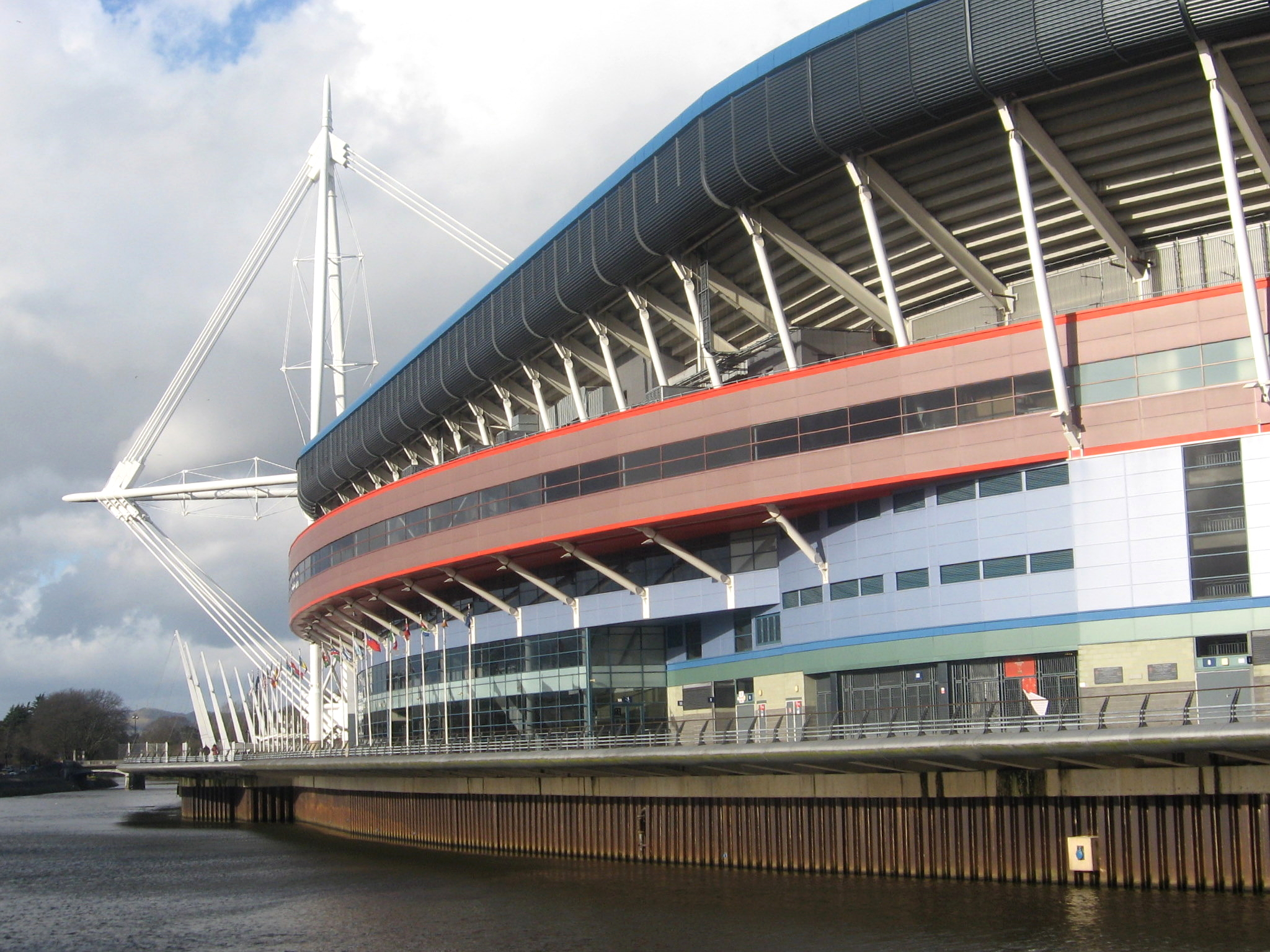
There’s also a unique egalitarianism about Welsh rugby. In a sport that was historically ridden with social elitism, Wales was the one bastion where the game was available to players from all social backgrounds; a place where miners and factory workers played alongside the accountants and solicitors. And who can deny the wonderfulness of their Cardiff home? I don’t care what you call the stadium nowadays or whether the roof is open or closed. There isn’t a more beautiful sound in rugby than 70,000 Welsh men and women belting out Hen wlad fy nhadau at the top of their voices.

You almost don’t mind losing to the Welsh. Rugby’s soul belongs in Wales and the game needs them to be strong. Wales’s players suffered merciless criticism in the last few weeks. It goes with the territory when rugby is a national obsession. There was always likely to be a reaction, therefore, and the only question was whether the Welsh response would be enough to overcome a confident Ireland. I must admit that I was feeling good about this one myself. Prior to the game, I ventured that Ireland would only lose in the event of either a massive Irish under-performance or if Wales put in an effort infinitely superior to anything seen this season. In the end, it was the latter. I thought Wales were superb last night: resolute in defence, tactically smart; clinical and creative in attack. When the home side sliced Ireland in two to put George North over for his first try, you sensed Ireland would struggle to respond.

And struggle they did. Although defensively brilliant in the first half-an-hour, the Irish diminished once they went behind. As we’ve seen before, this Irish team isn’t built to play catch-up. The Irish game-plan is predicated on winning collisions, maintaining a solid shape and carefully building scores. The system seems to break down irretrievably when the Irish are coerced into chasing the game. We saw how the Welsh ruthlessly took advantage of Sexton’s sojourn in the sin bin. Once the hosts crept ahead for the second time, moreover, the Irish struggled to regain momentum despite dominating territory and possession for long periods. It’s a recurring theme for this Irish team: a chronic inability to turn possession into points.

I heard Eddie O’Sullivan comment recently about how Ireland have to work very hard for their scores. It’s a valid point. How often do you see Joe Schmidt’s side score off first phase? Actually, it often seems to be the opposite. Tries are often only manufactured when the Irish attack has taken opponents through countless phases before eventually breaking them down. Either that, or they typically score off a driving maul or lineout move. Indeed, how often do you see this Irish side go through multiple phases, even in the opposition 22, and come away with nothing to show for it? We saw something similar in Cardiff two years ago and we saw it again last night. Ireland dominating possession but proving unable to manufacture many clear-cut opportunities. In a game of tight margins, three tries to nil tells its own story. I don’t necessarily buy the line that Ireland are too predictable, but you wonder if teams find them overly difficult to defend against. The impression persists that if you stop the Irish maul and have a good defensive lineout, you’re half-way there in terms of stopping Schmidt’s side.

Perhaps they’re not as good as we thought they were? Maybe, but Chicago wasn’t that long ago. We know only too well what this team is capable of. The problem has been consistency of performance. I think there is also a need to change some personnel. It sounds like sacrilege, but I think there are grounds for dropping CJ Stander. The Munster man is a superb workhorse and provides the sort of go forward ball that most teams yearn for. I can’t help but feel that he’s a bit too one dimensional at the highest level, though. Stander’s stats are off the chart, but sometimes mere figures don’t tell the whole story. Prior to yesterday’s game, the naturalised South African terrorised Six Nations defences with his peerless ability to break the gain line. Last night, every time he tried his usual trick, he got Sam Warburton. I’ve seen Stander hailed recently as a potential Test Lion. Munster’s favourite import is indeed a dependable and totemic player. In terms of international class, though, he’s not in Warburton’s league.

I’ve long been a fan of Peter O’Mahony. I think he’s a fine player. Technically brilliant, good at the breakdown and a consummate lineout operator to boot. The Cork man has had his injury problems, but he’s becoming impossible to ignore. Whether Stander or Heaslip is dropped to accommodate him is a debatable but secondary point. For me, O’Mahony has to start against England. Jared Payne will also come into contention and there’s no doubt that his reliability has been missed, especially in defence. The Henshaw-Ringrose partnership is worth sticking with, however, and Payne may have to settle for a bench spot. Iain Henderson will also come into the reckoning and there’s an argument for starting Cian Healy after a series of impressive cameos.

Selection aside, an international season that started so promisingly is ending with Ireland having an almighty point to prove. Having been slayed by the Dragon, Schmidt’s men will seek redemption next week against the old enemy. It’s a tough ask. It wasn’t meant to be this way. It’s great to see North resurrecting his Lions hopes, but you sense a few Irishmen are also fighting for selection (Rhys Webb’s performance last night highlighted that Conor Murray’s Lions Test berth is far from a formality). The English fixture may no longer be the grand finale we were hoping for, but it’s become a game Schmidt’s men, for a whole host of reasons, dare not lose.

Twitter: @rorymcgimpsey
 

Crunch Time for Ireland

In the world of rugby writing, there are certain rules and conventions. Most of these are unwritten; some are relatively modern in conception, but all hold true nonetheless. Sort of unspoken rules of engagement, if you like. Riddled with cliche. For example, in modern rugby vernacular, a coaching and management team is universally known as a “brains trust.” I don’t know why. It just is. Sounds good, you see. Fancy. Sophisticated. Similarly, a good old-fashioned clearance kick must now be termed an “exit strategy.” Modern rugby terminology demands it. A Six Nations match involving France, moreover, is invariably referred to as “Le Crunch”. See what I did there? In Anglo-French games, the use of this term is compulsory. Mandatory in previews and sports commentaries. For Ireland-France games, however, use is is optional. Still, you can bet your bottom Euro (I so wanted to say Franc there), that a legion of headline writers will use the hackneyed phrase before the week is out.

Ireland are playing France on Saturday, you see. With both sides having tasted defeat in the championship, the encounter has all the ingredients of a “must win.” While home advantage might prove decisive for Joe Schmidt’s men, you can never rest easy against the elusive, unpredictable French. France. How to make sense of France? Mercurial. Another word synonymous with French rugby and beloved of sportswriters. It’s bound to get several mentions this week, too! Everyone loves French flair, after all. Except France haven’t been so much with the flair in recent years. French sides of recent vintage have abandoned the traditional French modus operandi in favour of a decidedly more structured and formulaic approach. With rather mixed success, it has to be said. Guy Noves’s men haven’t been genuine contenders for quite a while and their fall from grace is a sad sight for those of us raised on the genius of Philippe Sella, Serge Blanco and the rest. France of 2017 have a mammoth pack at their disposal, but not a huge amount else in terms of attacking fluency.

The imminent return of Johnny Sexton after a frustrating spell on the sidelines will bolster an Irish side that’s lacked his direction and guidance in recent games. Paddy Jackson has done a more than creditable job in his absence, but the Leinster man is the best player in the world in his position; the best fly-half we’ve ever had-sorry ROG! Andrew Trimble may also return to the Irish ranks to further strengthen Schmidt’s hand and the Ulster man’s robustness will add extra defensive ballast against the ultra-physical French. If the game is as close as many are expecting, having such experienced and accomplished campaigners on board can only improve Ireland’s chances. It’ll be interesting to see also if Schmidt mixes up his pack for the merciless attrition that’s undoubtedly coming Ireland’s way.

For all the talk of the grand finale against Eddie Jones’s England on 18 March, the men in green have two extremely challenging encounters to negotiate first. Even if France are emphatically dismissed this weekend, a chastened and dangerous Wales lie in wait in two weeks time. To say that these two matches will go some way to defining Ireland’s 2017 Six Nations campaign would be an understatement of epic proportions. The Scottish performance was undoubtedly a massive blot on Ireland’s copybook, but Schmidt’s men are an infinitely better side than that underwhelming display suggested. It’s also wrong to read too much into the facile win over an extremely limited Italy side, but there was enough in Ireland’s performance in Rome to confirm that their Scottish blip was indeed an aberration. Sterner tests await. The first of these arrives on Saturday. There is no room for error. Lose and Ireland’s championship is effectively over. Win well; followed up with a victory in Cardiff, and the dream decider beckons. It’s time to deliver. Allez Les Verts!! 

Twitter: @rorymcgimpsey

Image result for france flag


Irish slow coaches pay the price!

Now we all know. It was the bus that did it. In referencing Ireland’s woefully slow start in their Six Nations loss against  Scotland, head coach Joe Schmidt mentioned the tardiness of the team bus by way of a metaphor for his team’s spectacular under-performance. While it’s obvious that Ireland’s coach didn’t intend his allusion to be taken overly literally, it’s amazing how many people have referenced Irish lateness as a genuine excuse for the team’s disastrous performance. Really? If anyone honestly thinks that a team coach arriving five minutes late constitutes a bona fide excuse for losing a Test match, they seriously need to have a look at themselves.

Yes, Ireland were indeed late for the seminal encounter with the Scots, but they were late where it mattered most: on the pitch rather than the stadium itself. In fact, Ireland didn’t really start playing until the second half, by which time much of the catastrophic damage had already been done. Even when the rattled visitors made a spirited comeback in a vastly improved second half effort, they lacked the control and composure to seal the deal. In the end, Schmidt’s men were devoid of excuses. The Irish simply didn’t turn up on Saturday and that will surely hurt them the most. In the gladiatorial and highly pressurised Test match arena, there is no room for obfuscation.

We thought Ireland were beyond this, that Schmidt had instilled a consistency of performance that mitigated against disasters like Saturday. However, I think the Irish seriously underestimated the intensity and aggression that the Scots brought to the party. You have to hand it to them; Vern Cotter’s men were inspired at the weekend and the Irish seemed perplexed at the scale of the incessant Scottish onslaught. I wonder too if the weather was a factor. All week, heavy rain and wind had been forecast and Schmidt, being the perfectionist that he is, would surely have planned for this eventuality. When the predicted inclemency failed to materialise, therefore, it’s possible that Ireland  might have been thrown a little and coerced into a game plan that dragged them unwillingly out of their comfort zone.

When all’s said and done, you can’t gift quality opponents three first half tries in a Six Nations encounter away from home and expect to emerge with the victory. Alex Dunbar’s try, in particular, looked exceedingly soft and betrayed an Irish outfit in slight defensive disarray. One suspects that Schmidt’s infamous Monday morning review was just as uncomfortable for Andy Farrell as it was for any of the Irish players. Equally, before we all get too downbeat and despondent, there’s nothing in the Irish display that isn’t eminently fixable and Schmidt will demand that players atone for their transgressions in this week’s crucial encounter with Conor O’Shea’s Italy. With bonus points up for grabs and a chastened Ireland already playing catch-up on their championship rivals, nothing less than maximum points will suffice. Such is the fate of slow coaches.

I was saddened to hear this week of the passing of Springbok legend, Joost van der Westhuizen. The South African hero was undoubtedly the best scrum-half I ever saw. A fine passer of a football, Joost was also supremely physical and had a tremendous strike rate in international rugby. May he rest in peace. Joost’s celebrated achievements on the rugby pitch pale into insignificance, however, compared to the courage, humility and dignity he showed in fighting the illness that’s cruelly taken him. Through his J9 foundation, Joost raised vital funds for research into motor neurone disease. As rugby remembers one of its own this weekend, we all have a chance to salute a real hero. You can learn more about J9 (and how to make a donation) here:

http://joost.co.za/

Twitter: @RoryMcGimpsey


Time for Ireland to shine!

It’s that time of year again. In these tough times we’re living in, it’s hard not to succumb to cynicism and negativity. After all, you only have to watch the television news or read a newspaper, to be bombarded with a relentless stream of woe and bad news. Yes, doom and gloom are everywhere, and there seems to be no escape from the consuming madness. Recent political decisions have only served to compound feelings of despondency and despair. And yet, in the midst of seemingly interminable darkness, the light of spring always brings a welcome infusion of happiness to our slightly beleaguered souls.

For rugby fans, this can only mean one thing: the Six Nations Championship. It’s fair to say that the much derided tournament has delivered much hope to an Irish nation that’s suffered its fair share of gloom in recent years. The Six Nations has been good to us. What wonderful memories we’ve been given by this great tournament. BOD’s hat-trick in Paris, ROG’s famous drop goal to seal the long awaited Slam and so much else besides (for those wondering what on earth I’m on about, Irish rugby fans have a strange tendency to speak in acronyms and abbreviations. And yes, I understand how irritating this must seem!).

Regardless of what else is happening in the world, the Six Nations always provides a welcome antidote to the harshness and monotony of everyday life. The competition itself is a mass of contradictions: a commercial powerhouse but one that is deeply rooted in history, tradition and Corinthian values that belong to a bygone age. In that sense, the grand old tournament is something of a sporting anachronism. A thoroughly professional competition that retains the quaintness and old-fashioned appeal of an amateur era long since consigned to the history books. Needless to say, the fans love it. What’s more remarkable, however, is that the Six Nations retains its enduring appeal despite a lack of spectacle and consistent entertainment value.

I appreciate there are those who may disagree on this point, but ask yourself the question: how often in the last ten years have you been blown away by a Six Nations match and the rugby on display? How often have you thought: “The occasion’s great and it’s nice to have a few pints in the spring sunshine; however the match we’ve just watched was pretty crap?” Of course, there have been exceptions and the business end of the tournament is never less than captivating, but the rugby itself has rarely sizzled in recent seasons. Instead, we’ve often been subjected to bore-fests, with defences dominating and teams adopting  win-at-all-costs mantras. Given the traditional format of the tournament, the absence of entertainment has hardly been surprising. Up to now, the Six Nations has predominantly been about survival and winning by any means possible.

That’s why the belated introduction of bonus points has been so universally welcomed. The initiative not only standardises the Six Nations with every other major rugby tournament on the planet, but opens up the possibility of a competition where attacking rugby is at a premium; with teams focusing on scoring tries and accumulating scores rather than shutting down opponents. One can only hope. Change was long overdue and it’s now up to the teams to show the same level of innovation on the pitch that administrators have shown in the boardrooms.

In terms of national interest, Ireland look well placed to mount a serious challenge for silverware. While the holy grail of the Grand Slam seems as elusive as ever, there’s absolutely no reason why Joe Schmidt’s men can’t regain a trophy they’ve won twice in the last three years. If a tricky opening fixture against the ascendant Scots can be negotiated safely, Ireland have the form and talent to go all the way. As ever, momentum is the key to Six Nations success. Of course so much depends on fortune and factors beyond Schmidt’s obsessive control. Injuries are part of the fabric of the modern game, but there are some men that Ireland dare not lose in the weeks ahead. Schmidt will pray that Johnny Sexon, Conor Murray and Robbie Henshaw get through the tournament relatively unscathed.

In some positions, though, Ireland have an embarrassment of wealth. Consider the abundance of talent the back row, for example, where the form of Josh van der Flier and CJ Stander could keep SOB on the bench (I’m at it again!). With the year that’s in it, Lions selection adds another layer of spice to an already fascinating competition in prospect. While Wales and France can never be discounted, Ireland’s main adversaries for the title seem to be Eddie Jones’s England. In extolling Ireland’s championship credentials, we mustn’t forget that Jones’s men have gone over a calendar year without tasting defeat.

Already, that final game on 18th March has the look of a championship decider. England, in Dublin, the day after St Patrick’s Day. It doesn’t get much better than that! How exciting would it be if both sides were going for a Slam to boot? Remember 2003?! Stay tuned. There’s certain to be twists, turns, upsets, and incidents galore. It’s what makes this tournament the colossus that it is. I guess it’s prediction time. Who’ll win the title, then? It’s a tough one this year. Do I go with heart or head? Who am I kidding. Heart wins every time. Ireland!!

P.S. Although I didn’t stay up to watch it, I was sorry to hear that Carl Frampton lost his title last night. I know Carl will be devastated to relinquish his unbeaten record, but all great champions come back from defeat even stronger. What a perfect opportunity to show, once and for all, that he belongs in the pantheon of greats. We haven’t heard the last of Carl Frampton!

Image courtesy of Wikipedia: By Hoops341 (Own work) [CC BY 3.0 (http://creativecommons.org/licenses/by/3.0)%5D, https://commons.wikimedia.org/wiki/File%3AAviva_Stadium_from_North_Stand.jpg


Twitter: @RoryMcGimpsey

Back To The Future

Following the fortunes of Irish rugby has been one of the main preoccupations of my adult life. It’s a pastime that’s given me my fair share of pleasure and pain. Of course it was great to celebrate the successes: the Grand Slam, Six Nations titles, Triple Crowns, provincial glory in the Heineken Cup. But as any true Irish fan will tell you, we’ve also had plenty of disappointment and heartache. Of course we’re supposed to treat those twin impostors just the same, but sport doesn’t work like that. It’s a realm where the heart rules the head.

And there’s been a lot of gloom surrounding Irish rugby in the past eighteen months. Following Ireland’s underwhelming exit from the World Cup at the quarter-final stage, the state of Irish rugby seemed to take a permanent turn for the worse in the ensuing months when the Irish provinces struggled to get out of their Champions Cup groups. All of a sudden, the previously exalted Irish national model was being criticised and condemned by all and sundry. Irish rugby was being stifled by conservatism and inertia, or so the allegation went. Such was the all pervasive wealth of the French clubs, moreover, it was claimed that the Irish could no longer compete on anything approaching equal terms.

Well, fast forward a year and the outlook is rather different. Not only have we seen a resurgent and confident national side thanks to the wondrous, historic victory over the All Blacks, Irish clubs have not only survived but prospered in Europe this season. The turnaround has been quite remarkable indeed. And the crowds are starting to return following years of apathy and disillusionment with the fading success. Nowhere is this transformation more evident than  Munster’s famous Thomond Park fortress. In recent times, the empty Thomond terraces spoke not only of the worst economic recession in living memory, but a more general malaise within Irish rugby. A generation of young rugby followers reared on success and who’d absolutely no memory of the bad old days struggled to adapt to changing realities. The boom had been great, but who needed the bust?

It’s for this reason and so many others, that the recent resurgence is to be welcomed. At last, Irish rugby followers have got smiles on their faces again and supporters are looking forward to the business end of the season with a degree of optimism not seen since the halcyon days of 2009 to 2012. The upturn in fortunes gives lie to the fallacy that the Irish system doesn’t work. Although imperfect and certainly riddled with flaws, the Irish system of central contracts affords a degree of protection and support that players can’t expect to experience elsewhere.

And our envied school and academy system consistently produces a conveyor belt of talent that the rich French clubs can only dream of enjoying. Just think: how good could we be if the supply lines were at last extended beyond the narrow, traditional rugby constituency? If you doubt the extent of talent within the Irish system, take a moment to ponder Joe Schmidt’s options in each position and you’ll realise the abundance that’s available. The last eighteen months have undoubtedly been a relatively tough time for the Irish game. Much soul searching has been done. And yet who were the first two teams to qualify from this season’s Champions’ Cup pools? Leinster and Munster. The demise of Irish rugby has been greatly exaggerated.

Twitter: @rorymcgimpsey


An obsession that’s spiralled out of control?

The cult of celebrity and the modern preoccupation with all things vaguely famous have become all-embracing. Current culture has an undue focus, verging on the obsessive, with anything remotely to do with celebrity and famous people. Has this focus become unhealthy? Are we in danger of going overboard in our intense interest with the supposedly great and good? Is there a need to restore some semblance of balance and perspective?

I want to preface what I’m about about to say with an admission that I was as sad as anyone to hear about celebrities passing away recently. George Michael, in particular, was an extremely talented and creative artist; the story of his tragic Christmas Day passing (how cruelly ironic given his back catalogue) one of the most poignant of 2016. And how can you fail to be touched by Debbie Reynolds passing just a day after the premature death of her daughter, Carrie Fisher? Sad news indeed. Reminders of our mortality and the rampant injustice of unexpected and sudden passing.

I’ve been taken aback by the reaction, though. Like most of you, I suspect, my Facebook and Twitter pages have been awash with expressions of sorrow and grief-yes grief, I don’t think that’s too strong a word to use here. Sentiments of condolence and sadness have been in abundance throughout the last week in social media land. I’ve no doubt that such expressions are borne of the utmost sincerity. In fact, I think it’s rather healthy that, as a society, we can convey empathy and compassion through our collective affection for cherished stars. Am I the only one who thinks it’s all a little over-the-top, though?

It started with Princess Diana. I used to think that we were too emotionally stunted in this part of the world to bother ourselves with excessive displays of public emotion and extreme sentimentality. That was until Diana passed away in 1997. Those old enough to remember will recall unprecedented scenes of public grief and emotion; grown adults wailing uncontrollably over someone they’d never met. I still find that odd.

And such extreme feelings about celebrity death have only intensified in the years since. Nowadays, instant reaction is not only expected but demanded when a celebrity passing occurs (regardless of how vaguely the term “celebrity” is applied). A Z-Lister from the 1950s has passed away? The modern world insists that expressions of sadness are posted immediately on every social media platform. Imagine if Diana’s tragic passing had happened in the Facebook era. It really doesn’t bear thinking about!

I’m not saying this to get at anyone. Far from it. We’ve all been taken in by the pull of Facebook and I’ve certainly posted absurd things on social media that I’ve regretted with hindsight. I understand that social media websites encourage and manipulate us into feeding the relentless celebrity monster. We can resist, though. We don’t have to conform to Facebook’s interpretation of social commentary and its insatiable demand for sentimentality. We can ask if our priorities have become a wee bit skewed.

It’s wrong to make false comparisons between completely unrelated events, but I do wonder if the ubiquitous cult of celebrity has gone too far. We live in a cruel world. Children are dying in Aleppo, wars and famines are raging far and wide; the scourge of global terrorism threatens us all. Yet what do we hear about that? Radio silence, a lot of the time. Of course one can weep for Aleppo and still feel sad when a celebrity we liked in our childhood passes away. The two things aren’t mutually exclusive. But has the focus on celebrity become too unbridled? Do we need to row back a little? Is it right that the Kardashians loom large in our consciousness, while more important events are relegated to the sidelines and obscurity?

And therein lies the danger of our modern preoccupation with fame. It’s not a harmless vice. We’re all guilty. And I think we need to change. There’s nothing new with this obsession, of course, but technology encourages us to take it all too far. In the modern world, it’s all too easy to think of a scenario where someone passes away in our local town (or even our extended family) and we feel apathy and disconnection in response. That can’t be right. We must resist a world where we only become properly moved and animated when a famous person passes. Celebrities and icons are important to us 21st Century beings. They’ve become the new nobility, royalty even, that distract us from the harshness and boredom of everyday life. Many of us also feel an affection and affiliation for the stars that entertained us on the television and radio during our youth.

There’s nothing wrong with any of that. There really isn’t. But in our collective obsession with fame, we must be careful not to lose sight of what really matters. We won’t ever turn our backs on celebrity. Nor do we have to. It’s fantastic that we have so many entertainers that we hold dear and who’ve provided us with decades of pleasure.

I don’t buy this 2016 thing, though. It’s utter garbage. Nonsense upon stilts! Yes, many icons have passed in the last twelve months, but I don’t think we gain much by linking random and wholly unconnected events. After all, what did Paul Daniels and Muhammad Ali have in common aside from having passed away this calendar year and being considered famous in the British Isles? Mortality affects us all, of course, and even our beloved celebrities aren’t immune from its clutches. It’s undeniably sad to hear the news when much-loved stars pass away. May they all rest in peace. My hope for 2017, however, is that the new year will be good to mankind, but also that we regain some equilibrium in our increasingly unhealthy obsession with celebrity.

Twitter: @RoryMcGimpsey

I would like to take the opportunity to wish you all a Happy New Year and thank you for all your support and encouragement with the blog. It means a lot!


Every reason for Pat to go on the Lam!

Is there such a thing as loyalty in professional sport? As quaint and antiquated as the notion is, surely fidelity still has merits? The question arises on the back of this week’s shock announcement that celebrated Connacht coach Pat Lam is departing at the end of the current season. Lam’s destination is the currently struggling, but upwardly mobile Bristol, a move made all the more attractive by the fact that the west country club is financed by billionaire benefactor, Stephen Lansdown. Connacht’s players and fans are understandably despondent at Lam’s untimely and unexpected departure. The Samoan coach has been incredible for the province, guiding the franchise to its first taste of silverware through last season’s Pro12 success. Sentiment aside, though, is Lam right to make the move?

There are, of course, commercial and financial factors underpinning all of this. In a free and open market, coaches and players can come and go as they please. Professional rugby has never been a more competitive and rewarding environment. If recent reports are to be believed, Lam’s package at Bristol is rumoured to be in the region of anywhere between £500,000 and £700,000 per annum. Yes, you read that correctly! That is a remarkable level of remuneration for a club rugby coach. Suffice to say, those colossal figures are considerably more than the ambitious Connacht could ever match.

But surely it’s about more than money? Lam is building something in Galway, something substantive that transcends material reward. The men from the Sportsground achieved an historic feat last season and they did so in terrific style. Lam’s brand of running, passing rugby was not only pleasing on the eye, it delivered the goods in emphatic fashion. Make no mistake about it, Connacht’s achievement last term was herculean and its magnitude is hard to convey fully in a couple of paragraphs. Let’s put it like this, though. Leicester’s footballers were rightly hailed for their wonderful Premier League achievement last season. As good as Leicester’s win was, I believe that Connacht’s achievement was even greater.

After all, this was a franchise that almost went out out of business in 2003. Connacht were finished, as extinct as the legendary Dodo, only for a last minute reprieve to save them as a professional entity. From that indubitably dark place, the Galway men emerged to become Pro 12 champions last year. What a metamorphosis. What a transformation. What a journey. And it’s the brilliant Lam who delivered it for them, building on the firm foundations laid by Michael Bradley, Eric Elwood and others. The achievement of the Connacht coach wasn’t just manifested on the rugby pitch, however. It was much more holistic and all embracing than that.

Lam has done so much to instil and inculcate a progressive, winning culture in the west of Ireland. Connacht are not so much improved as unrecognisable from their former selves. Yes, the players have been a revelation, but the primary credit must go to their head coach. Lam has been relentless and uncompromising in driving standards at the previously unheralded club. At last, the phrase “four proud provinces” has been invested with some meaning beyond a catchy marketing slogan or the verse of a dodgy Phil Coulter song. Lam will certainly be a tough act to follow. No wonder the players are concerned. Bundee Aki, in a moment he may or may not regret, has already tweeted to announce that he’s “pissed.”

Is it fair to blame Lam, though? I don’t see how it is. From what I’ve heard of him, the challenge in Bristol will appeal just as much as the obvious financial rewards. And it’s hard to blame anyone for wanting to develop and advance their professional prospects in a challenging role. One of the common descriptions of Lam in the last couple of days has been “career coach.” The term is levied almost pejoratively.

But surely everyone working in professional rugby is careerist to some extent? After all, Lam’s not working for the good of his health! Connacht’s coach has a young family and it would be quite wrong to begrudge him this unique opportunity, given all he’s done for Irish rugby. Professional coaching is predominantly results driven. It’s a precarious and fickle way to earn a living. More than ever, a coach needs to make hay while the sun shines. Lam’s departure is also symptomatic of an inflated and commercially driven rugby market. As in soccer, coaches can now enjoy the plentiful and unprecedented opportunities currently available.

And let’s not forget that Bristol’s recruitment of Lam is the flip side of Irish rugby’s burgeoning success. The better we get, the more vulnerable we are to losing key personnel. Witness the Premiership’s snapping up of Ulster veteran Dan Tuohy this week by, you’ve guessed it, Bristol! It’s always sad to see Irish rugby losing people they’ve invested a lot of time in, but that’s the nature of the beast. It’s a players’ market. And, increasingly, a coaches’ one, too. As for loyalty? Loyalty is a noble and laudable trait, but to the best of my knowledge, it’s yet to put food on anyone’s table. Good luck to Pat Lam.

Twitter: @rorymcgimpsey

Image Courtesy of Wikipedia: By supernova3688 from Flickr [CC BY 2.0 (http://creativecommons.org/licenses/by/2.0)%5D, via Wikimedia Commons

File:Bath v Connacht Rugby - 28th October 06 (32).jpg

Winning the moment in front of your face!

I heard an interesting podcast interview with Paul O’Connell recently (you can listen to it here). In the interview, the Irish rugby legend discussed how he struggled to cope with the mental preparation for games in his younger days. It was an interesting insight. We think of O’Connell now as the ultimate professional; a consummate leader who always adapted well to the rigours and disciplines of professional sport.

Not so. In the interview, the Limerick man discussed how, on the contrary, his psychological preparation often left a lot to be desired. In particular, he recounted how his goal-setting, especially, was extremely unrealistic and often quite counterproductive in terms of achieving the desired outcomes. Despite his tremendous success, the big man was often anxious about his performance and struggled to enjoy his enviable life as a rugby professional.

To remedy the problem, Paul sought out sports psychologists and sourced advice from other renowned sportspeople and coaches to establish how they coped with the dreaded pressure to deliver, to achieve constant success. In the end, the former Irish captain used a variety of techniques to help him enjoy what is often the tedious, daily grind of the elite sportsman. However, interestingly, it wasn’t a psychologist that offered the most useful and applicable piece of advice. So, what were the words of wisdom the big man found so helpful? How to stop fretting about the past and silence your nagging doubts about the future? Simple. “Win the moment in front of your face.”

Think about it. It’s genius simplified in terms of advice. And it’s universal. In fact, it’s hard not to think of a scenario where the advice above isn’t useful. Worry and stress are certainly destructive emotions, if left unchecked. We all do it. It’s so easy to let the demons take over and succumb to the negative force that is worry. Whether it’s fretting pointlessly over perceived mistakes from the past, agonising over a decision, or torturing yourself over future scenarios, many of which never come to pass. Preparing endlessly for disasters that never happen. The hectic nature of modern life encourages and exacerbates these stresses in a way that didn’t happen in days gone by.

Everything is measured nowadays. Everything has a (often quite artificial) deadline. We all feel rushed and hurried. Either we’re late for something or it feels as if we should be! More and more is demanded of us and we often  struggle to cope with the pressure. The strains of modern life can be extremely burdensome. So much to do and so little time to do it in. I must admit I’ve struggled myself with prioritising tasks and separating the urgent from the dispensable; the immediate from that which can be deferred safely. Like a lot of us I suspect, my reflex instinct is to try to do as much as possible, regardless of the task’s actual urgency. I set unrealistic goals and often beat myself up for failure to meet self-imposed deadlines and targets.

And you know what? All that stress and worry is ultimately futile. Pointless. So much wasted energy. I guess that’s what Paul O’Connell discovered, albeit belatedly in his career. There’s a great saying in sport: “Control the controllables.” It makes total sense. Don’t worry about the superficial and irrelevant. Don’t let ancillary factors distract you from the task at hand. Don’t worry about what your teammates or perceived rivals are doing. Just focus on yourself. Do you what you can to improve and don’t dwell on mistakes. Learn from them.

Concentrate on being the best you can be and shut out unhelpful, irrelevant distractions. Let’s be honest. Life can be stressful enough. Why let unnecessary worry destroy all joy and fulfilment from your daily routine? Ever since I heard the interview, I find myself regularly reinforcing the message. I can’t get away from it. It’s so simple. But it’s beautiful in its profoundness. So next time you’re lamenting a supposedly bad decision or worrying needlessly about the future, don’t. Listen to O’Connell instead. Just win the moment in front of your  face. It’s all any of us can do, anyway. The past has already happened and the future will take care of itself. “Mindfulness for rugby players,” O’Connell called it. The wise sage who provided this advice? Joe Schmidt. “Win the moment in front of your face.” There’s a lesson for us all in there somewhere.

Twitter: @rorymcgimpsey


Irish Rugby mood far from All Black

Blacklash or back-up? Prior to yesterday’s game, we speculated which it would be. Would Ireland  replicate their historic win over a chastened All Blacks in Chicago? Or would the peerless world champions atone for a momentary blip on their relentless drive for world domination by routing the Irish? In the end, it was neither.

New Zealand predictably prevailed at the Aviva Stadium in front of a raucous and expectant Irish crowd, but don’t let the scoreline deceive you. Ireland played incredibly well yesterday. In fact, they were superb. Only the result was missing. Chicago was not only backed-up and emulated, but to  a degree, surpassed. The All Blacks came to Dublin highly motivated and bristling with intent. Back to full strength and with a full panel to choose from, the world champions threw the kitchen sink at Ireland, but couldn’t subdue them. The hosts kept attacking and it was they who looked fresher at the end of a hugely attritional battle.

The New Zealanders played right on the edge, as they thundered into the collisions with a ferocity that’s reserved only for the biggest battles. The game’s pin-up boys sauntered through the Rugby Championship like it was a stroll in the park, amassing massive scores against some of the best defences in the world, playing beautiful, running rugby in the process. The Kiwis didn’t have the same luxury against Ireland. Instead, they had to fight for everything they got. Boy, they were made to work for it. In fact, Ireland’s defence was only breached through a combination of individual brilliance, slight defensive errors and, to be honest, some questionable refereeing decisions. In a contest of breathtaking test match intensity, the Irish gave every bit as good as they got. Leaving the ground yesterday, the pervading feeling of disappointment was palpable among the departing fans. And yet, in the cold light of day, this was a performance to take pride in; one which instils considerable hope for the future.

Fantastic individual performances were littered throughout the side and contributed to a fine collective effort. His defensive lapse for Beauden Barrett’s try aside, Conor Murray was again awesome; the fulcrum of everything Ireland did well. Surely, the Munster man, barring injury, is now nailed on as the starting Lions scrum-half this summer? Tadhg Furlong wasn’t too far behind him. Furlong’s scrummaging prowess has been obvious for a while, but he was immense around the park yesterday as well; bashing opponents all over the place. He was great in Chicago and even better yesterday. The Irish tight-head is another to have catapulted himself firmly into Warren Gatland’s consciousness.

However, the best performance came from Sean O’Brien, by a country mile. Incredibly, O’Brien’s selection had been debated prior to the game, with several pundits suggesting he might be omitted from the squad altogether! Instead, we were treated to a back row masterclass from the Tullow Tank. Every time Ireland’s openside got the ball, he made ground. O’Brien must have covered  every blade of grass in Lansdowne Road yesterday in a very dynamic performance. It says everything about the high standards the Irish flanker sets that he’ll probably be more concerned with the two try-scoring chances he failed to take than lauding his best display in a green shirt for a long time.

In truth, the rugby gods deserted Ireland yesterday. The men in green were extremely unlucky to lose Sexton so early. Not to mention Chicago match-winner Robbie Henshaw, who was poleaxed by a horrendous Sam Cane tackle. How the New Zealand openside escaped (at least) a yellow card is utterly beyond me. And not forgetting CJ Stander, who was having an absolute stormer until he was removed from the action for an apparent head injury assessment, not to return. Josh van der Flier wasn’t too far behind the more experienced O’Brien in the carrying stakes. There’s fierce competition for places in the Irish back row and it’s truly mouth watering to consider the abundance of talent available when everyone’s fit.  Garry Ringrose and Paddy Jackson also contributed impressive cameos off the bench, providing welcome legs and attacking impetus when Ireland were chasing the game in the second half.

To be honest, we’ve become a bit spoilt. As I left the stadium yesterday and headed for the train home, I wondered where my acute feeling of despondency had come from. Even 2013 didn’t feel this bad. After all, it’s no disgrace to lose to the bloody All Blacks! Then it dawned on me that the sense of disappointment is directly proportional to the level of expectation. What we’re seeing is without precedent. There’s never been such optimism within Irish rugby. This team has taken us to uncharted territory. We must adjust our horizons accordingly. Ireland are swimming with the sharks, the big boys. We’re not going to win them all. That’s sport. That’s life.

But the fact Ireland are prospering in this exalted company shows how far the team has come. We’re seeing a seismic shift in Irish rugby and it’ll be fascinating to see how far they can go on Schmidt’s intelligent watch.  When losing to the All Blacks by 12 points prompts a bout of soul searching, you get an emphatic sense of the recent progress. Irish rugby is in a good place. Sean Fitzpatrick spoke yesterday about a clash between the two best teams in the world. Think about that. Yesterday’s result was certainly disappointing, but there’s absolutely no need for any Irish rugby fan to feel all black as the weekend draws to a close.

File:Sean O'Brien 2015 RWC.jpg

Image from Wikipedia: By Warwick Gastinger (Rugby World Cup 2015 DSCN4964) [CC BY 2.0 (http://creativecommons.org/licenses/by/2.0)%5D, via Wikimedia Commons

Twitter: @rorymcgimpsey