Hillary’s Trump Card!

“Hobson’s Choice: A choice of taking what is available or nothing at all.”

In a nutshell, that is the dilemma facing American voters when they take to the polls on 8 November for the U.S. Presidential election that will choose their next leader. A choice that seems like no real option at all, between two candidates who inspire apathy at best, nausea at worst. To say it’s an unenviable prospect is an understatement of epic proportions. What’s the alternative to choosing between two distinctly unappealing candidates? Staying at home? For a nation that prides itself as a bastion of democracy, there must always be a compelling reason to exercise the democratic franchise previous generations struggled to attain. Alternatively, voters can plump for Gary Johnson. However, with the Libertarian candidate all but out of the contest, where is the merit in that action? When all’s said and done, no matter how it’s diced, the 2016 Presidential election boils down to a simple, inescapable choice: Hillary Clinton or Donald Trump. Hobson’s choice indeed.

The overriding narrative of the campaign thus far has been a seemingly obsessive determination to keep the controversial Trump out of the White House at all costs. Until last week, the Republican nominee’s chances of victory still seemed remote, but with only a week left to attract voters, all indications suggest that the maverick businessman is closing the gap on his more illustrious rival. An ABC News/Washington Post poll remarkably has Trump leading by a percentage point over the Democratic nominee. Indeed, Clinton’s aggregate lead (at the time of writing) could even be as low as two points, depending on which pollster you listen to. All of a sudden, the heretofore unthinkable scenario involving a Trump victory is looking more plausible by the day. While a Trump win remains pretty unlikely, the outcome dreaded by many citizens in the U.S. and beyond is far from impossible. Quite a remarkable turn of events. However, as the recent Brexit vote demonstrated, improbable outcomes should never be discounted in politics.

So, what’s going on? Although Trump is ostensibly a mainstream candidate, his journey to presidential nomination is that of the definitive political outsider. Despite his ratification as a candidate by the Grand Old Party, Trump is undoubtedly a maverick and eccentric; a candidate who’s the very antithesis of political orthodoxy. While it’s easy to characterise Trump’s ambitious march to the White House as the ultimate manifestation of an oversized ego that’s spiralling out of control, his nomination is symbolic of a wider trend that’s both global and increasingly prevalent. Mr Trump’s campaign is indicative of a deepening disillusionment with establishment politics and mainstream political faces. After all, you can’t get any more “establishment” than  the GOP and yet they’ve opted for the most unorthodox candidate imaginable to square off against Hillary for the presidency. Many commentators had earmarked 2016 as an election that was eminently winnable for the Republicans and yet they’ve staked their modern political reputation on a man that courts controversy like it’s going out of fashion. Allegations of misogyny, confusion over immigration and an allegedly reprehensible attitude to Islam. None of these excesses have derailed the Trump campaign in any significant way.

Cynicism with establishment politics is evident throughout the world at the moment. It’s one of the primary drivers of the UKIP expansion into British politics and is further evidenced by the plethora of independent candidates contesting Irish elections, for example. On a more local level, disenchantment with mainstream politics was seen in the last Stormont election, where Gerry Carroll topped the poll in West Belfast for People Before Profit. If the establishment parties aren’t listening to these outcries, they should be. Voters are becoming increasingly disillusioned with political norms and conventions, and they’re turning to some extremely unorthodox alternatives as a consequence. Global recessions, economic meltdowns and unjustifiable wars have all played their part. As has declining standards of living for millions of ordinary people who feel that traditional politicians no longer represent them or their interests. Political mavericks who previously wouldn’t have stood a chance of electoral success are reaping the rewards for voter apathy and disillusionment. The upcoming U.S. election has become the unlikely nexus of this popular disdain.

The success of Trump is just one manifestation of this crisis of political confidence. A victory that once seemed absurd and preposterous is now potentially only a week away. Clinton’s inherent lack of charm and warmth is only part of the problem. Many voters are utterly fed up with the obnoxious Bush/Clinton duopoly that’s dominated the most prestigious political office in the world for over 15 years. Only Obama’s underwhelming tenure has interrupted the relentless advancement of these wealthy familial dynasties. Perhaps this is why Republicans unexpectedly anointed Trump as their nominee. He wasn’t Jeb Bush. What applies to Republican grandees, is equally true of ordinary voters. Trump represents the ultimate outsider and maverick. This is the reason the Clinton camp must fear him. Trump can win on 8 November. Make no mistake about that.

Clinton, on the other hand, seems tired and battle weary in comparison. The unfortunate allusions to her health may be somewhat below the belt, but they’ve fuelled the perception of a candidate lacking a certain freshness and energy. Certainly, it seems a lifetime since Hillary’s old man announced himself as a “bridge to the future.” The entire Clinton project seems rather jaded from the halcyon days when Bill’s charisma and charm endeared all and sundry with its universal appeal. For all that, Hillary is still the devil we all know, if you excuse my clumsy turn of phrase. A safe pair of hands that is better trusted with an office that, although diminished, is still the most important in world politics. Will Clinton’s constancy and perceived reliability be enough to finally accede to the job of her dreams in what’s surely her last chance? Or will the ultimate outsider pull off one of the greatest electoral upsets of all time? History beckons for Mrs Clinton, but the polls are too close to permit anyone sleeping easy. Despite an unfortunate lack of box office appeal, Hillary has one last trump card. She is not Donald. That may be enough to see her home by a whisker and allow the rest of us to breathe a massive sigh of relief.

Twitter: @RoryMcGimpsey


For Axel, they stood up and fought!

As expected, it was a match brimming with emotion. It’s cliched to talk about blood, sweat and tears. But all three elements were abundantly obvious in Thomond Park yesterday. Of course the occasion was poignant and sombre. Paradoxically though, there was something incredibly joyous about yesterday afternoon, a celebration of life in all its bizarre complexity. I wasn’t at Thomond Park-I actually watched the game on my laptop through Sky Go-but I don’t think you had to be there to appreciate the beauty and poignancy of Munster’s epic win over a fancied Glasgow side, battered mercilessly by an unrelenting force of nature.

They came in their droves to honour Axel and pay tribute in the only way these fine rugby folk know. What they got was fantastic and memorable. Way better than any of us had imagined. There are special moments in life and wonderful moments in sport. What transpired in Limerick yesterday was one of those divine moments. The 26,500 lucky souls who witnessed it will surely remember it for the rest of their lives. One to tell the grandchildren about. How I wish I’d been there. Munster’s brilliant supporters said goodbye to a legend. One of their own. They also saw the re-emergence of their side as Champions Cup giants.

We wondered beforehand how they’d fare. How would the players cope with the magnitude and emotion of the occasion? Munster’s players only buried their coach on Friday and were expected somehow to play one of the biggest games of their season yesterday. How was that possible? I ventured during the week that a match was the best thing for them, but I wasn’t sure if I was right. From the kick off yesterday, I knew. We all knew. This was a different Munster, a profoundly different animal from anything we’d seen these last few seasons. From the first whistle, there was an intensity about the men in red that laid down the ultimate marker. Ferocious at the breakdown, monumentally aggressive in defence and their forwards hunting the ball with obsessive determination. “We’re not going to be beaten today. It doesn’t matter what you do, we’re not going to let you out of here with anything.” You can imagine the impassioned battle cries before the game. Defeat simply wasn’t an option.

It reminded me of 2007 and Ireland’s historic victory over England at Croke Park. Given the symbolism and cultural/historical significance of the occasion, Ireland’s players couldn’t countenance defeat at the hands of the old enemy. Losing would have been too much to bear. Guys like Brian O’Driscoll and Paul O’Connell have spoken passionately about the responsibility the players felt that day nine years go. It was one of those matches where they just had to deliver-failure wasn’t an option. And deliver they did. England were emphatically routed 43-13 in one of the finest performances of the Eddie O’Sullivan era. That was another emotive and unique occasion. The pre-match anthems were immaculately respected and heartily sung in equal measure. After an emotional build-up, the players and fans delivered together. As one, in complete unison. We were extremely proud to be Irish that day; it was one of the great rugby days. I’m sure the hordes of rugby pilgrims at Thomond Park were proud to be Munster men yesterday.

Typical of Ireland’s romantic province, they did it the hard way. Of course they did. This is Munster! We all remember the great wins against the odds, the “miracle match” against Gloucester in 2003 the most famous. Well, we had another miracle yesterday. Despite Munster’s magnificent start, the Thomond Park men were cast into the abyss after only 20 minutes, with Keith Earls sent off for a tip tackle on Glasgow hooker, Fraser Brown. Irrespective of whether you agree with the decision-I actually think the referee was spot on and fair play to Jerome Garces for refusing to be swayed by emotion-Earls’s red card seemed a calamity for Munster. And yet their performance never dipped. If anything, Earls’s misfortune inspired  his side to even greater heights. Remarkably, an effort that was already superlative, got even better.

Munster’s defensive effort was a joy to behold; it was simply marvellous. The Thomond men didn’t concede an inch to the Warriors all afternoon. What really impressed, though, was the shape and perseverance of the Munster attack. The hosts kept going and didn’t let the small matter of Glasgow’s numerical advantage impede their efforts. With a man down, teams often retreat into their shell in an attempt to maintain their lead and hold out. Not Munster. These guys don’t know the meaning of the word retreat.

Special mention must go to skipper, Peter O’Mahony. The Irish flanker was simply immense yesterday. It was noticeable how Munster’s performance only dipped slightly in the last 20 minutes when Glasgow got over for a brace of consolation tries. O’Mahony, still regaining match fitness after his horrendous injury, was called ashore on 61 minutes. The timing of Glasgow’s mini-revival wasn’t a coincidence! Sometimes you only appreciate the true worth of a player when they’re absent. I also thought hooker Niall Scannell had a superb game-a poor early overthrow notwithstanding. It’s unfair to single anyone out, though. They were all outstanding, to a man. Munster’s players gave every inch of their souls with this inspired performance.

It seems perverse to say it, but the tragic circumstances of last week have revived something in Munster. A latent passion that’s been missing for a while. As a city, Limerick suffered badly in the recession. This downturn has been reflected inevitably in Munster attendances. In recent seasons, crowds have been down and the decibel levels much reduced from the halcyon days. We all remember the rampaging red army touring Europe in their thousands. It was the European Cup’s first love affair: Munster and their wonderful fans. The empty Thomond terraces of recent times were an incongruous sight in comparison. Yesterday felt like the good old days. A capacity crowd, a cacophony of sound, flags and banners fluttering in the wind. A wonderful sight. It’s cruelly ironic, but Foley’s tragic, premature passing could act as a catalyst for a Munster revival. It seems wrong to think in such terms. It would be marvellous if yesterday’s heroics could be sustained, though.

Irish rugby needs Munster. The Champions Cup needs Munster. Sport needs Munster. Europe hasn’t been the same without the red army. While Lansdowne Road is the undisputed home of Irish rugby, its soul has always been in Limerick. This ultimate rugby town is the embodiment of the sport’s values. And Limerick people are rightly proud of the egalitarian way they promote rugby’s traditions. In Limerick, rugby is the game of the people and players have always enjoyed a symbiotic relationship with their fans in this great city.

It’s strange how tragedy often reveals character in a way the mundane and prosaic routines of everyday life cannot. Humanity, empathy and compassion often announce themselves resoundingly in a crisis. In tough times, we see the very best of mankind. The way in which the rugby community has rallied around the Foley family says much about the values of the sport. Professionalism may have eroded some of rugby’s ethos, but the essence of it remains intact. For that, we should all be extremely proud and grateful. We have seen its importance time and again in the past week. I’m not sure if it was planned or spontaneous but following yesterday’s game, the players formed a huddle and sang the Munster anthem, “Stand Up and Fight.” The huddle included Anthony’s sons, Dan and Tony. It was a lovely gesture. A rugby match can only be a small consolation in the midst of any human tragedy, but as a tribute to a great rugby man, yesterday’s game was undoubtedly something special. Another miracle match. It might sound a bit trite to say it, but I’m going to anyway. A true Munster giant was looking down filled with pride. Rest in peace, Anthony Foley. Munster legend and hero.

‘Stan’ up an’ fight until you hear de bell,
Stan’ toe to toe, trade blow fer blow,
Keep punchin’ till you make yer punches tell,
Show dat crowd watcher know!
Until you hear dat bell, dat final bell,
Stan’ up an’ fight like hell!’

Twitter: @RoryMcGimpsey

Passing Of A Legend

I had it all planned out. I was going to write an article about Donald Trump and the US Presidential election today. With absolutely no disrespect intended to the controversial Republican candidate, events compel me to write about a real man instead. A man of modesty, integrity and humble achievement. I’m writing about Anthony “Axel” Foley instead.

Munster head coach Foley passed away last night in a Paris hotel ahead of Munster’s Champions Cup fixture against Racing 92. Sometimes news hits you that stops you in your tracks. The devastating, heartbreaking news that Foley had passed away was in that mould. The rugby community is in mourning at the premature passing of one of its own. In coming to terms with this awful news, we must remember that this is a personal tragedy. Anthony leaves behind his wife Olive and two young children. He was just 42 years old. With any sudden passing, there’s always a feeling of numbness and utter disbelief. Incomprehension. How can something so dreadful and unpredictable happen? While it’ll surely takes us all a very long time to make any  sense of this tragedy, it’s only fitting that we take time to remember Anthony Foley, the legend.

Who was Anthony Foley? Foley was an Irish rugby icon. The son of Munster legend Brendan Foley, the former Irish number eight captained his beloved province to its maiden Heineken Cup victory over Biarritz in 2006. The pictures from that win are so poignant today; Munster’s captain the vision of pride and happiness as he collected the trophy. After all the years of heartache and near misses, how apt that it was Foley who held the cherished trophy aloft in Cardiff. Like his good friend and teammate Keith Wood, Foley was a native of Killaloe in County Clare. A talented sportsman, the young Foley grew up playing several codes-as is often the way in Munster-but it was inevitable that rugby would capture his heart. Anthony was part of the great Shannon side that dominated Irish club rugby at the tail end of the 1990s. It was here that he first came to my attention, as part of one of the greatest back rows ever to emerge from the Irish club game: Quinlan, Foley and Halvey. They were an awesome combination, the bedrock of the Shannon side that won four AIL titles in a row.

One of the first club games I attended while studying in Dublin was St Mary’s v Shannon in Templeville Road. The Templeogue side had a good pack in those days. Trevor Brennan was in the thick of it on the blindside, a real hard man who was an extremely good back rower to boot. Big Steve Jameson was the captain, if memory serves me correctly. Another beast of a player. My abiding memory of that day was how little dominance the St Mary’s pack got. This was a superb St Mary’s team (Denis Hickie lined up on the wing), but nobody dominated that Shannon team in those days. They were just too good. This was the 1997/98 season-the Thomond Park men were at their peak then. And a young Anthony Foley was central to their dominance.

Foley gained his first international cap in 1995 in what was then the Five Nations. Test recognition strangely eluded him for a few seasons before he was recalled by Warren Gatland in 2000. He was a mainstay on Eddie O’Sullivan’s team for the next few seasons, accumulating 62 caps in the process. O’Sullivan always spoke very highly of Foley and clearly regarded the Shannon man as a very clever rugby player; one of his pivotal men. Foley wasn’t the most dynamic of number eights and didn’t carry as much ball as, say, his Leinster peer Victor Costello. You never saw him claiming that much ball in the lineout either. Yet for all that, there was no doubt that Foley was a tremendous rugby player. A man for the trenches. A bit like former England flanker Richard Hill, the Munster back rower did so much unseen work and revelled in the unheralded graft that his position demanded. He was invariably in the right place at the right time and could always be relied upon to make crucial, match winning tackles when needed.

Anthony Foley was the ultimate leader. A man of few words, Munster’s talisman led by example and set an uncompromising standard that his teammates were bound to follow. Anthony was old-school. Fashioned in the amateur and semi-professional environs of the AIL, he nonetheless seamlessly made the transition to professionalism through hard work and incredible mental toughness. Just like his Shannon club-mate Mick Galwey, Foley not only survived amateurism but was part of the core group that set the standards at Thomond Park at the start of the professional era. He was undoubtedly a really hard man, but Anthony was so much more than that. He was a totem, a winner, a captain, an inspiration. Someone who may not have been Munster’s most glamorous player, but was always the most valuable player.

I didn’t know Anthony Foley, but I had the pleasure of brushing shoulders with him a couple of times. I remember covering the 2015 Pro 12 final for Planet Rugby at Ravenhill. Foley’s Munster were well beaten by Glasgow that day, but Anthony didn’t flinch from facing the assembled hacks afterwards. Typical of the man, Foley answered the media’s questions with candour and humour. Despite his obvious disappointment, Foley fronted up in his forthright and accessible manner. True Munster honesty. It was the same when his Munster side defeated Ulster at the Kingspan Stadium last season. Admittedly, performances had been decidedly mixed since Foley assumed the head coach mantle in 2014, but it’s extremely unfair to lay all failings on a man who’s Munster through and through. For all that, Foley never shied away from his own mistakes and could be very honest in highlighting aspects that needed to be improved. Therefore, we must be fair and acknowledge Axel’s immense role in rebuilding a province going through a challenging and transitional time. Change is never easy and you have to admire those who have the balls to take on a job knowing it’s going to be tough. That’s the definition of character.

Much was made of Anthony’s de facto demotion following the appointment of Rassie Erasmus as Munster Director of Rugby. However, Munster’s decent start to the season indicates that the two men have been working well together and were in the process of forming a formidable coaching partnership. I heard a journalist discuss recently how relaxed Axel looked this season compared to last term, suggesting that Erasmus’s arrival had the desired effect of taking the pressure off Foley. One of the saddest elements of Anthony’s premature passing is the feeling that he was only getting started in his coaching career. In rugby terms, this man had so much more to offer. How devastating that we’ve lost him. This is a monumental loss for Irish rugby. I’ve always had a huge amount of respect for Anthony Foley. In fact, he was the subject of my first bog on these pages. Little did I know then, he would be gone less than six months later. How awful. How unbelievable. How tragic. Such is the fragility and fleetingness of life. Knowing life’s innate shortness doesn’t make it any easier to bear, however. Sometimes the transience of life is too cruel for words. Goodbye Anthony Foley. Rugby legend, Munster hero, family man. Gone way too soon.

Twitter: @RoryMcGimpsey

New Zealand All Blacks: Better Every Day

“Better Every Day.”

Three small words. As far as mantras go, it’s deceptively simple. And yet that concise phrase encapsulates so much.”Better Every Day” is the catchphrase of the New Zealand All Blacks. It’s not so much a phrase as a mission statement, a forceful affirmation of everything this great team is about. For make no mistake about it, the All Blacks are great in every sense of that hackneyed word. It’s hard to improve on excellence. When you’re already the best (and by some considerable distance), how do you become even better? How do you ward off the corrosive effects of complacency and overconfidence? How do you continue the strive for excellence when you’ve already achieved everything your sport has to offer? You do it by being better every day.

We know that the All Blacks are a phenomenon. And yet the current crop is exceeding every expectation in terms of performances and achievements. The men in black have won the last two World Cups and have just wrapped up the Rugby Championship (the southern hemisphere equivalent of the Six Nations) with a 57-15 rout of South Africa in Durban. New Zealand went through the tournament unbeaten-itself a fine achievement. Since winning the World Cup on home soil in 2011, the All Blacks have accrued a winning ratio of 93%. Indeed, since retaining their crown in last year’s World Cup, the world champions have yet to taste defeat-their unbeaten streak encompassing a full calendar year and counting. In fact, last weekend’s facile dismissal of South Africa equalled their own proud world record of 17 consecutive Test wins. Few will bet against them inking a new chapter into the record books in the upcoming weeks.

However, it’s not just the unimpeachable record that’s beguiling rugby fans. It’s the nature of the performances, too. These All Blacks are not simply beating good teams, they’re hammering them. And they’re destroying them with a brand of rugby that’s taking their sport to new levels. This team really has everything. They’re not just streets ahead of every opponent, but light years. From a different planet. It’s not that their weaknesses are imperceptible. Non-existent, more like!

In fact, it’s hard to identify any discernible weak points in the New Zealand side. If any failings exist, they keep them extremely well hidden. Good set-piece, dynamic forwards, creative backs, pace, power, experience, tactical nous, offloading, imperious kicking…….I could go on ad nauseam.  The All Blacks have it all. To be honest, I actually don’t think that this is the best All Blacks team I’ve seen, talent wise. However, despite that, Steve Hansen’s men have found a way to take consistency of excellence to new levels. They invariably find a way to win, even when not playing well-the definitive hallmark of any great side. Winning is not so much a habit as an imperative for these guys. As former England coach Stuart Lancaster once said, they are always finding a way to out-think opponents; to “problem solve” in the moment.

So how is such excellence sustained? How does a great team continue to get better? “Better Every Day” was first introduced by former All Black coach Graham Henry and the motto has been continued under the astute supervision of his successor, Steve Hansen. Henry conceived the phrase as a way of guarding against complacency and ensuring his side always performed to its optimum. While the All Blacks famously set the bar high, Henry wanted something that would enshrine and inculcate the expected standards within the squad. Something that would prevent them relying on past accolades and push on for more success. To not just set standards, but instil a philosophy where the entire organisation was constantly focused on getting better. That’s what the phrase means. “Forget about what you’ve achieved in the past, what have you done to improve yourself today?” “What are you doing to improve yourself tomorrow?”

Ostensibly the phrase is a bit glib when you first hear it, but its meaning is actually rather profound. Contrary to first impressions, the motto isn’t about perfection. It’s about the quest for excellence. Always striving to do better. Looking for constant improvement. Not being content simply to maintain standards, but wanting to enhance and augment them. Never settling for anything but the best. It’s also about learning. The concept is: achievement is a journey rather than a destination. And common goals are made manifestly easier when everyone commits to continuous improvement; learning everyday to make the team better. By committing to constant improvement, standards aren’t just adhered to but really amplified, in both an individual and a collective sense. Objectives are rigorously and methodically surpassed; achievements routinely ticked off through a relentless desire to reach the highest standards.

Therefore, “Better Every Day” isn’t just a highly effective team motto. It’s much more than that. It’s a value system. Those three short words encapsulate everything that it means to be an All Black. That it’s not enough simply to win. You have to keep winning, keep learning, keep striving to be better and do better. And like all great value systems, the phrase is universal; you can apply it to virtually anything. It’s the reason why the All Blacks are so good. The reason they win more often than they lose. The reason why they are never content with past achievements, but are always looking for more. It’s the reason why they never succumb to complacency. It’s the reason the All Blacks are so far ahead of the game and the rest of the world is forlornly playing catch-up. Any team or individual can have talent. But talent alone doesn’t equate to greatness. What all great sportsmen have in common is an irrepressible drive for excellence. An insatiable appetite for success that countenances almost any sacrifice in its fulfillment. A steadfast refusal to accept anything less than the best. To not just go the extra mile in the pursuit of greatness, but to travel the extra highway. “Better Every Day” as a way of life. Ireland play this great side twice this autumn. Some fans are predicting Joe Schmidt’s men will finally break their All Black duck. You have to admire such optimism! This prediction could come back to haunt me and I’ll be delighted if it does. Ireland have two chances of beating the current All Blacks: slim and none. And slim is leaving town fast!

Image courtesy of Wikipedia:

By Roman.b (Own work) [FAL], via Wikimedia Commons

https://en.wikipedia.org/wiki/New_Zealand_national_rugby_union_team


Twitter: @RoryMcGimpsey


Culture Clash for Big Sam

During the last year, I’ve discovered the pleasure of podcasts. Podcasts are great. For the uninitiated, they are like radio, except you choose the content you want to listen to. It’s one of my simple pleasures in life, sourcing a podcast on a topic and then spending an hour or two listening to an informed discussion. In recent times, I’ve listened to several podcasts on diverse subjects, from music to current affairs and a host of other things in between. In terms of sport, there are some terrific podcasts available.

My personal favourite is Off The Ball from Newstalk. Every week, Joe Molloy and the team provide informed and entertaining discussion from the Irish sports world. All major sports are covered, with the station providing extensive analysis on the hot topics of the day. The journalism is, in itself, excellent, and the team always provides pundits of the highest quality. It’s worth tuning in to listen to Joe Brolly or Paul Kimmage alone-both are Off The Ball regulars. The predominant subject being discussed last week was of course Sam Allardyce’s ignominious departure from the England post after only one game in charge. As usual, Off The Ball was my first port of call when looking for perceptive analysis. The Allardyce debate made for interesting listening, to say the least.

For those who don’t know, England’s manager left his post last week following an investigation by the Daily Telegraph into alleged corruption in English football. Part of their expose featured  clandestine footage of Allardyce negotiating a speaking engagement with businessmen that supposedly had interests in the Far East but who were, in fact, undercover Telegraph reporters. The rush to judgement on Big Sam was predictably speedy, with the prevailing consensus holding that his position had become untenable once the Telegraph footage came to light. The common view was that such enterprises were inconsistent with Allardyce’s exalted position and were fundamentally unbecoming of an England manager. To make matters worse, the former West Ham boss apparently discussed potential circumvention of FA rules on the contentious matter of third party ownership. The media verdict on Allardyce was both harsh and immediate. Many condemned England’s manager as foolish, while greedy was the adjective that featured most often in commentaries.

Whether you view the Allardyce sting as entrapment or a fine piece of investigative journalism, it’s hard not to have an opinion on his dramatic fall from grace. While the Telegraph has undoubtedly done us a service in publicising discussions those involved would have preferred to stay hidden, I think these events tell us much more about the changing nature of football than they do about any individual. Far be it from me to defend Allardyce, but some aspects of the media narrative don’t really add up. Firstly, in relation to greed, is it possible to condemn anyone as greedy in a world where market forces dominate and superstar players regularly earn in excess of £200,000 a week? When the underlying climate is intrinsically avaricious, how can anyone in football condemn Allardyce without leaving themselves open to hypocrisy? Moreover, as far as misdemeanours go, using your position to negotiate some keynote speaking isn’t exactly the worst practice ever committed in football.

I think most analysts have got this story wrong. In my view, Allardyce’s fall has little to do with greed and nothing whatsoever to do with corruption. Instead, Allardyce’s demise is about culture. Sam Allardyce didn’t change. Football did. Big Sam has long been perceived as the archetypal old-school manager; a traditional British boss with an instinctive feel for the conventions of the English game. Ironically, Allardyce’s lack of modernity was probably one of the reasons he was so attractive to his FA employers. After the cosmopolitan sophistication of Sven Goran-Eriksson and Fabio Capello and the eccentricity of Steve McLaren and Roy Hodgson, here was a man who embodied the most desirable traits of the good, old-fashioned British football manager. Someone grounded by modesty and grit, yet still possessing a sharp football brain and a humble intellect. For years, these were the sort of managers that prospered in English football.

However, the world of football has changed beyond all recognition in the last 20 years. Old-school managers like Allardyce have been steadily replaced by a new breed of boss. These new kids on the block exude sophistication and finesse; they have little concern for outdated and antediluvian attitudes. It’s easy to think of the prototype of the modern manager: young, brash, confident and cultured. Usually a former player. Whereas once guys like Big Sam were ubiquitous in English football, that style of manager is gradually becoming extinct, replaced by the Mourinhos, Guardiolas and Pochettinos of this world. It’s hard not to feel for the old-school manager. Football is abandoning them one by one. And as they fall, the modus operandi of the traditional boss slowly disappears. Allardyce has done nothing wrong, but still finds himself obsolete.

I don’t know everything that the Telegraph has uncovered, but I’d be very surprised if corruption was endemic in English football. Modern managers simply have way too much to lose to think in terms of “bungs.” Granted, power and money corrupt. And absolute power corrupts absolutely, as Lord Acton famously observed. But why would managers and players risk their livelihoods in this crass fashion when it’s so easy to enrich yourself quite legitimately in the modern game? It just doesn’t add up. Where vast riches exist in any walk of life, there’s always the potential for corruption. However, it’s hard to believe that such practices are institutionalised in modern football. And whatever rump of malpractice that still exists will eventually be washed away by the vast corporate machine that is the Premier League. As for Big Sam, don’t be too hard on him. Allardyce has certainly been naive and, by his own admission, a little foolish. And yes, he’s probably been a tad greedy. But no crime has been committed.  It must be hard when the world you’ve known changes before your very eyes. That’s the thing about culture. If you don’t change with it, it will leave you behind for good.

Twitter: @RoryMcGimpsey


Can The Stick Exist Alongside The Carrot?

Should a manager or sports coach ever criticise his/her players in public? This rhetorical question comes to mind on the back of comments made by United boss Jose Mourinho in the last couple of weeks. Mourinho was quite outspoken about certain players in the aftermath of recent defeats and the Portuguese manager’s attitude has sparked a debate over what is and isn’t appropriate for someone in his position. Further to my last blog, the Red Devils predictably bounced back (what a cringe-worthy and cliched phrase!) from their early season slump with an emphatic victory over last season’s champions Leicester City. The United boss was completely vindicated in his selections and tactics as the Old Trafford men slayed the Foxes with overwhelming ease. Were Mourinho’s previous statements justified on this basis? Certainly, whatever the United boss said to his players, it seemed to work a treat.

The answer depends on your perspective and level of tolerance. Conventional football wisdom decrees that you never criticise your players in public. According to this logic, the environs of the dressing room are sacrosanct and any harsh words uttered behind closed doors should remain eternally private. For example, Alex Ferguson had a strict policy of omerta in relation to his players and obsessively refrained from critiquing them in the public arena. Assuming that the former United boss was much more direct behind closed doors, overt public criticism was nevertheless a territory he never ventured into. However, his current successor is cut from a different cloth. Mourinho is notoriously bold, brash and outspoken. United’s manager has no qualms about speaking his mind and seems unconcerned whose feathers get ruffled in the process. While Mourinho would probably contest that he’s overtly, publicly critical of his players, there’s little doubt that the former Chelsea coach is more forthright in his views than many of his managerial peers and predecessors. So, which approach is correct?

It’s easy to maintain the traditional view that players should never be criticised in public. After all, it’s only logical that players respond better to praise than opprobrium. However, I think that public censure can sometimes be justified if it provokes and inspires the right response. It’s a rather counter-intuitive argument to make, but some individuals respond well to honest, forthright critique. As a motivational tool, constructive criticism can be extremely effective. Apart from anything else, it can induce a desire to prove the manger or coach wrong. Similarly, many players respond best to honest and accurate appraisals of their performance. While well-meaning platitudes are well and good, nothing beats an honest and candid assessment of players’ performance aspects that can be improved. It’s always helpful to have essential evaluation measured in a quantifiable way. The key word here is “constructive.”

I believe firmly that individuals are always motivated by praise and encouragement above anything else. This is true in any walk of life. Sport, business, the arts: you name it. I was never much of a rugby player, but I played a little in school and college. I was very enthusiastic, but lacked the coordination and skill to be much of a player. I remember one of my coaches being particularly harsh on some of us. This man had little inclination to encourage or spare any feelings in respect of our efforts. His philosophy was very much one of tough love. And this was supposed to be a fun experience?! Yes, a good (metaphorical) kick up the arse is needed sometimes, but surely there has to be a combination of carrot and stick employed? My abiding memory of this coach’s approach is how utterly self-defeating it was. Regardless of what he thought of our abilities, surely he realised that he would have got more out of us by praising every once in a while? To be fair, this approach wasn’t particularly uncommon. It’s how things were done in those days. A sort of faux drill sergeant mentality.  In my experience, it never worked very well. Professional sport is a much different world to social rugby of course, but the basic principle is the same. How best to motivate an individual? How tough should a coach be?

Sometimes unfiltered honesty is the best policy. Whatever one thinks of Mourinho’s exhortations, they seem to have worked pretty well. Moreover, the United manager’s record confirms that his methods usually succeed. When dealing with elite footballers, the last thing you want is a bunch of precious prima donnas who regard any sort of criticism as a form of personal judgement. After all, we’re talking about multi-millionaire superstars here. Surely, the least we can expect of them is an ability to withstand a little honest critique? The key is balance, in my view. Although it can be beneficial to put the cat among the pigeons sometimes, coaches must be careful not to erode the unity and purpose that underscores any team. Modern players are much more delicate flowers than their forerunners. It’s a fine line to tread. Jose Mourinho is infinitely more qualified to make these judgements than I am and I’m sure he’ll get the balance right.  Constructive criticism certainly has its place, but there’s no substitute for sincere encouragement. In sport, history tells us the best results are achieved by a careful juxtaposition of carrot and stick.

Twitter:@RoryMcGimpsey

Calm Down, It’s Only September!

While I was engrossed in the excitement of the All-Ireland football final, the news came through that Man United had slumped to their third consecutive loss. The soccer giants lost 3-1 to Watford at Vicarage Road today, a chastening defeat that prompted the usual hysteria and over-reaction among many fans and pundits. Disappointment at your team losing is perfectly understandable of course and distress at defeat is hardly a new phenomenon. A bizarre trend is emerging, though. We are living in a curious age where instant reaction is demanded in these moments and our responses are becoming ludicrously disproportionate, devoid of any semblance of balance or common sense.

The honeymoon is over. While fans were somewhat divided over the vexed appointment of Jose Mourinho, it’s fair to say the overwhelming majority were prepared to give the controversial Portuguese manager a chance. And it all started so promisingly. A decent preseason, one that heralded a smattering of marquee signatures, was followed by a good start to the league. Typical of the new manager, the performances were functional rather than overly spectacular, but the results were coming and there seemed to be intent to play attacking football. I saw the first home game against Southampton and I must say I was very impressed with the United performance. The hosts were organised and efficient, and new signing Paul Pogba looked every inch the superstar in midfield. Certainly his inflated price tag didn’t look excessive that evening.

Granted, things haven’t gone too well since. Last week’s deflating loss in the Manchester derby was followed up by Europa League disappointment in Rotterdam. Today’s reverse against Watford has therefore topped off a rather horrendous week from a United viewpoint. And I get the fact that these losses aren’t mere statistics. There’s a context to all of this. Admittedly, I haven’t seen all the matches, but I understand that the performances as much as the results have caused concern. The City performance, in particular, was a profound reality check. The final score hardly did justice to the extent of City’s pervasive dominance. I tuned out before the end, but the Premier League favourites were mesmerising in the Manchester derby. City were fantastic, exhibiting a blistering pace that was combined with pin-point accuracy. Make no mistake, this was as emphatic a 2-1 victory as you’ll ever see. If City had taken their chances in the first half, it could have been really embarrassing for Mourinho. United have seen it all before with a Pep Guardiola team, of course. That bloody carousel! Today’s defeat punctured the Mourinho bubble further. A 3-1 loss to Watford. A reverse of this nature was always going to spell the end of the honeymoon.

Disappointment I understand. But I don’t get the hysteria. A cursory look at some of the post-game reaction unearthed the usual internet hyperbole and overreaction. Football commentary has become so tabloid. Everything’s a crisis. I’ve seen several comments on Twitter today, that openly question Mourinho’s tenure. United’s boss is getting slated by elements on the internet and social media. Unfavourable comparisons are even being made with immediate predecessors Louis Van Gaal and the unfortunate David Moyes. Moyes, in particular, proved fatally vulnerable to similar levels of impatience when he was shown the door with indecent haste ten months into a six-year contract. Mourinho will certainly be given more time, but he must find such commentary extremely perplexing. Let’s not lose our heads here. We’re only five games into the league season. There’s plenty of football to be played.

I’m not Mourinho’s biggest fan, but his record tells you there’s absolutely no need to panic. The man’s a perpetual winner, who invariably gets the job done in the end. What we’re seeing here isn’t based on calm and rational analysis. It’s hysteria and an extreme form of hysteria at that. We live in a world that demands instant success. Everything has to be expeditious and immediate. These days, we don’t wait to make our judgements. We offer them instantaneously and without mercy. Patience is viewed almost as an old-fashioned concept. In the modern era, football supporters demand immediate success and expect their teams to win every game. Expectations are less realistic than ever. Fans baulk at the idea of giving a manager time to make his mark.

If a match is lost, then the manager is in trouble. Lose a couple of games and it’s magnified into a full-blown crisis. Crisis? The word has lost all meaning in the modern vernacular. Wars and famines are crises. Losing a few football matches constitutes a blip, a transient setback from which great managers like Mourinho inevitably recover. These modern trends have eroded our sanity and sense. We’ve lost the power of perspective. Social media hasn’t helped in this regard. The demand for instant judgement and rapid reaction is insatiable. It’s a relentless, self-serving monster. But we’re all in trouble when fans are getting perturbed by the loss of a couple of early season games. Sport is an emotive business and it’s easy to get caught up in the madness. Anyone getting too hot and bothered really need to take a step back, though. Calm down dears, it’s only September!

P.S. For those who missed it, Dublin and Mayo served up a cracker at Croke Park today. The game ended as a draw, but the result was in doubt until virtually the last kick of the contest. Whenever the Dubs threatened to pull away, Mayo came back and the Connacht men showed great heart to tie up a game that seemed lost. It’s hard to resist the thought that today was Mayo’s best chance for the Sam. They were, by common consent, the better team and would surely have won were it not for the costly concession of two own-goals. One hopes they have enough in the tank to go again. The replay promises to be unmissable viewing!

Twitter: @RoryMcGimpsey

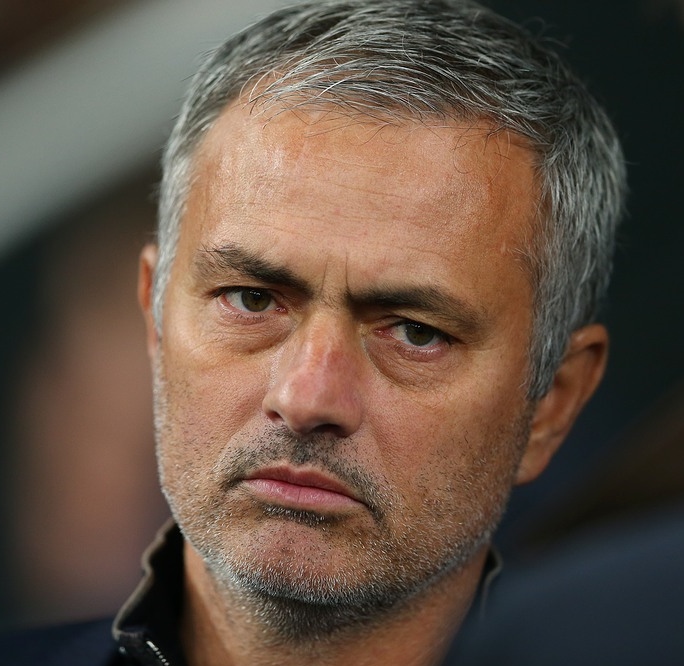
Image courtesy of Wikipedia: By Aleksandr Osipov (José Mourinho) [CC BY-SA 2.0 (http://creativecommons.org/licenses/by-sa/2.0)%5D, via Wikimedia Commons https://commons.wikimedia.org/wiki/File%3AJos%C3%A9_Mourinho_in_Kyiv%2C_October_2015.jpg

File:José Mourinho in Kyiv, October 2015.jpg

The Lion King: Part 2

Where does the time go? I remember writing a piece four years’ ago about the appointment of Warren Gatland as British and Irish Lions head coach. In a very cliched way, I called it “Gatland: The Lion King.” Well, we’re all set for the sequel. This week’s reappointment of the Wales coach was as predictable as the rising of the sun. Gatland joins Ian McGeechan as the only coaches to lead the Lions on consecutive tours in what is undoubtedly the toughest assignment of them all: a tour to New Zealand. It’s not a coincidence that only one Lions squad has won a Test series in the land of the long white cloud (the 1971 side coached by Carwyn James was one of the greatest rugby teams of all-time). New Zealand is a fiendishly difficult touring destination-as seen in the Lions last visit there 12 years’ ago, when Clive Woodward’s tourists were whitewashed 3-0 by Graham Henry’s irrepressible All Blacks side. The Lions committee has deemed the irascible Kiwi as the right man to take on mission impossible-the withdrawals of Eddie Jones and Joe Schmidt from the race meant that Gatland’s ratification was a mere formality. That there wasn’t a host of viable contenders shouldn’t detract from Gatland’s achievement, though. This appointment is as meritocratic as it gets. The New Zealander’s record is second to none: a Lions series victory, two Grand Slams, and a Heineken Cup speaks for itself.

Despite having amassed such unimpeachable credentials, the Wales coach remains a polarising figure in this part of the world. Much of the animosity was generated by the infamous dropping of Irish legend Brian O’Driscoll for the third Lions Test against Australia in 2013. The fact that the Lions handsomely won the encounter failed to vindicate Gatland’s controversial selection in the eyes of most Ireland fans. As I wrote at the time, while I understood Gatland’s rationale in jettisoning the Irish icon for the decisive Test, I felt nevertheless that the Wales coach missed a trick. Although changes were undoubtedly needed for the series finale, there wasn’t a compelling enough case for O’Driscoll to be omitted from the match-day squad. Gatland has complained repeatedly (as elaborated last week) that the hostility generated from dropping the Irishman tarnished the greatest achievement of his coaching career. I believe firmly that the Kiwi could have had his cake and eaten it. By making key changes, but keeping O’Driscoll in situ, the Lions supremo could have enjoyed his historic achievement without the unnecessary controversy that emanated from his contentious third Test selection.

That’s all ancient history now, but the episode tells us much about the Kiwi’s character:tough, uncompromising, ruthless and stubborn. That’s why Gatland’s a winner. Although Wales’s main man is universally respected, it’s hard to think of the former Waikato hooker in terms of affection. Yes, Gatland and his achievements are roundly admired, but liked? Probably not. Winners are rarely likeable characters in sport, though. Look at Sir Alex Ferguson or Jose Mourinho as cast-iron proof of that! Prodigious winners both, but they wouldn’t be obvious candidates for the diplomatic corps. I think Gatland falls into that category too. The Wales coach loves to win and he isn’t too bothered who gets offended or affronted along the way. When push came to shove, therefore, you can see why the Lions’ blazers opted for the incumbent to take on their latest crusade. For a mission as challenging as the New Zealand tour, you have to be led by the best man available. That man is Warren Gatland.

The scale of the Lions’ challenge is underlined by the lengthening achievements accrued by the world champions. The current All Blacks are majestic, a class apart. I rose early yesterday to watch them in the Rugby Championship. The best team in the world was playing Argentina and struggled initially to find its rhythm. The Pumas played extremely well for the first 50 minutes or so, competing ferociously at every breakdown and contact area. New Zealand, on the other hand, looked sluggish and lethargic for large portions of the match. The final score? 57-22 to New Zealand! The All Blacks pulled away in the second half, impressively routing the Argentinians with a barrage of late tries. It was the world champions’ 14th consecutive victory-incredibly, the All Blacks haven’t lost a home match since 2009! The win was instructive and tells us much about the relentless New Zealand juggernaut. This team knows how to win in virtually any circumstance. They invariably find a way, even when subjected to fierce pressure throughout the pitch. When they’re good, they’re sublime, but even when not playing well, the All Blacks usually get the job done. Just ask Ireland about November 2013. This is the size of the task facing the 2017 Lions, then. In order to make history, the tourists must outwit and outplay one of the greatest teams ever to play the game. Mission impossible indeed. There is a glimmer of hope, though, for the Lions have got their first big decision right by appointing the correct coach. Things are about to get very interesting. It’s time for the most eagerly awaited sequel in rugby: The Lion King, Part 2!

Twitter: @RoryMcGimpsey

Pienaar’s Departure: Rhetoric and Myth

Ulster rugby fans are in a daze. Their state of discomfiture has been caused by the shock announcement that star scrum-half Ruan Pienaar is departing Belfast’s shores at the end of the current season-2016/17. The unexpected announcement came yesterday and follows seemingly intensive negotiations between the player, his employers in Ulster Rugby and the governing body charged with the administration of the sport in Ireland: the IRFU. In a brief statement yesterday, Ulster Rugby confirmed that their best player will leave at the end of the season and the wording left no doubt that this devastating decision was the IRFU’s call. The union’s rationale centres around their so-called “succession” policy, that is the IRFU’s insistence that only one non-Irish qualified player is permitted across the four provinces in each position. Given the dearth of indigenous scrum-halves following last season’s retirement of Eoin Reddan, Pienaar’s position at Ulster has become increasingly untenable, it seems. The news prompted predictable bile on the internet and social media from the fair-weather keyboard fans, who haven’t the first clue about Irish rugby structures or Ulster’s role within the national system. A lot of these guys are new to the sport and their knowledge of Irish rugby could be written on the back of a postage stamp, leaving plenty of room to spare.

The IRFU has been cast as the villain of the piece, the big bad wolves who have come to take our beloved Ruan away. Is this an accurate depiction of events? Is it fair, even? I don’t think so. Leaving emotion and sentiment aside for a moment, let’s look at the facts. Pienaar has been with Ulster for six years and counting. It’s extremely rare-unprecedented even-for a foreign player to survive so long within the Irish system. It just doesn’t happen. The only comparable figure in terms of longevity is Leinster’s Isa Nacewa and he’s currently enjoying his second stint at his province, having returned from retirement in New Zealand. In reality, Ulster have done extremely well out of their superstar scrum-half and have undoubtedly seen the best of him since his arrival in 2010. The South African international was an instrumental figure in Ulster’s march to the Heineken Cup final in 2012 and Pienaar was one of the key men in making the red hand province the perennial contenders they are today. That the province has come up short of silverware can hardly be laid at Pienaar’s door. Think where the Ravenhill men would have been without him these past few seasons. In truth, Ulster are fortunate to have had Pienaar for so long. Remember, he was nearly gone two years’ ago when French giants Toulon came calling. Only the adroit negotiation of David Humphreys kept Ulster’s star man at Ravenhill in one of his final acts as Operations Director.

Ireland’s scrum-half shortage isn’t a myth. Following Reddan’s retirement, international class nines in Ireland consist of Conor Murray and Kieran Marmion. That’s it. And Marmion is a comparative rookie in Test terms. One of the main arguments in favour of keeping Pienaar in situ at the Kingspan was his pivotal role in nurturing, developing and mentoring young Ulster scrum-halves. Bringing native talent on. Except it hasn’t really worked out like that. Ruan’s deputy is still veteran Paul Marshall, while the promising David Shanahan is untested at the highest level. Pienaar has been the integral figure in the development of Ulster’s half-back play. There’s no doubt that the Springbok superstar has taken his side’s back line to new levels. But if Pienaar’s continued presence, six years into an already extended stay, is  now impeding the development of indigenous Irish talent, then surely the time is right for a parting of the ways? This certainly seems to be David Nucifora’s train of thought. The Irish provinces exist to serve the national team, not the other way round. Some of our new fans might not like that fact, but that’s how it is. Like it or lump it.

While the fans’ disappointment is understandable, there’s been an unduly emotional and sentimental angle to this story that’s not helpful. Since yesterday, I’ve read several people complaining how it’s unfair that Pienaar is being uprooted from Ulster against his will. How exactly? Well, it’s claimed that Pienaar’s family is well settled in Belfast and apparently they have a strong association with a local church. While that’s terrific to see, it seems preposterously idealistic to expect the IRFU to take such factors into account while negotiating a professional contract. Ruan Pienaar is a professional rugby player and a very well remunerated one at that. He knows the drill. Professional rugby is an unsentimental business and it’s naive to think of such dealings in terms of fidelity. This is business. Emotion doesn’t come into it. At the end of the day, it’s a reciprocal relationship. Ruan Pienaar has been brilliant for Ulster Rugby and Ulster has been good to Pienaar, but all good things come to an end eventually.

That said, I’m sorry to see him go. Ruan is undoubtedly the greatest Ulster player I’ve seen, bar none. He is indisputably world class. When it comes to quality, I didn’t think David Humphreys would be surpassed, but Pienaar is a cut above the rest. The very personification of class. More than that, he’s a good bloke. Everyone in Irish rugby will wish him well and we’ll be delighted if he comes back in a coaching or off-field capacity some day. It’s sad indeed to see Ruan go, but even the greats must depart the scene some time. Irish rugby doesn’t owe anyone a living, however, and although the IRFU will be criticised over this, they’re right to put succession above short term expediency. At the end of the day, Irish interests will always come before any non-qualified player, no matter who they are. Thanks for everything, Ruan. You’ve been the man. Now the time’s come for your adopted province to prosper without your expert guidance.

Twitter: @RoryMcGimpsey