Ulster on the up!

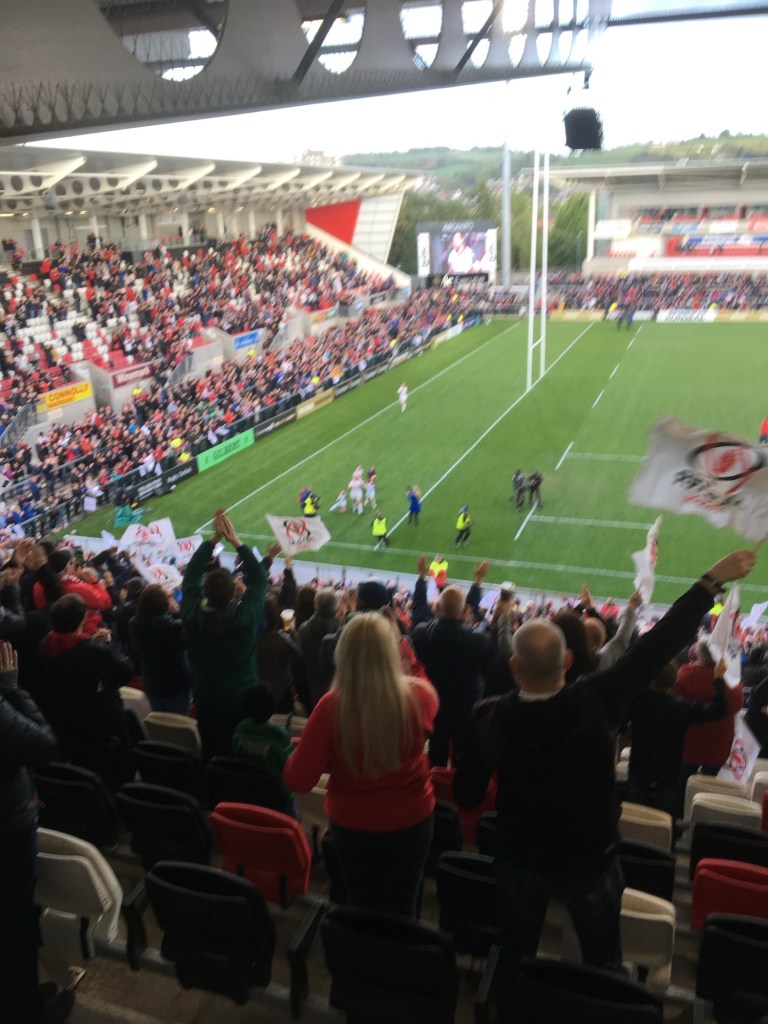
As 2026 begins, Ulster rugby fans are heartened by the team’s recent upward curve. Following a disappointing couple of years, there’s now genuine positivity over the team’s performances.

At the time of writing, Ulster are fifth in the URC table, with a game in hand over their top table rivals, and positioned very well for this stage of the season. But it’s the manner of performances that stands out.

The Ravenhill side has been a joy to watch this season, scoring lovely tries and creating plenty on the edges. There’s a clear emphasis on ball in hand and players are clearly encouraged to attack. The overall shape looks sharp and impressive.

Richie Murphy has settled in well now, but key to this season’s transformation is attack coach, Mark Sexton. A former Irish Under-20s coach, Sexton evidently shares his brother’s rugby intelligence and joy of developing strategies for unlocking defences. Sexton’s impact was not so much quick as immediate.

For a team so long in stasis, the emergence of young players like Jude Postlethwaite, Zac Ward and Tom Stewart catches the eye. Suddenly, the team has options, and is no longer reliant on a handful of key players. There’s genuine competition within the squad and that excites.

There’s a long way to go, of course, and Ulster are still a few players short of being a top European side. No-one’s getting carried away by any stretch of the imagination. But Ulster’s improvement is tangible and they deserve credit on the progress to date. Exciting times in Belfast. If they continue like this, we’ll all be standing up for the Ulstermen at the end of the season.

@rorymcgimpsey.bsky.social
Wizard of Oz

The death of Ozzy Osbourne leaves a void in the rock and metal worlds that’ll never be filled. That he was the ultimate one off is obvious. But Ozzy was so much more: trailblazer, megastar and cultural icon.

The most impressive element of his crazy, legendary career is that there were essentially two of them. When Osbourne left Black Sabbath after a glorious stint that birthed a genre, it seemed over. On the contrary, it was merely beginning.

The second phase of Ozzy’s journey emulated the first and, arguably, surpassed it with a solo career full of commercial triumphs. The high water marks were undoubtedly those early solo albums alongside the late, great Randy Rhoads.

Sharon masterminded it all, of course, bringing her unique blend of mammoth ambition and business savvy. You don’t mess with Sharon, as Iron Maiden’s Bruce Dickinson discovered at Ozzfest in 2005. From metal pioneer, to supreme solo success and, eventually, inconceivably, reality tv star. That’s one hell of a trip.

Notwithstanding his undoubted fame, Ozzy was consistently underestimated musically. No-one stays at the top that long without genuine talent and Osbourne had plenty of it. But it was his sheer charisma and relatability that resonated most with the masses.

How poignant that Ozzy’s passing came mere days after the triumphant final gig at Villa Park. Like many of us, I was shocked when I heard the news. Some people you just don’t expect to die!

That said, given Ozzy’s legendary hard living lifestyle, it’s a minor miracle he made it to 76. If we’re honest, that’s what we most admired begrudgingly about Osbourne. Ozzy embodied a lifelong commitment to the cause. A lot of people pretend to be rock n’ roll. Ozzy was the real deal!

@rorymcgimpsey

Simon Says!

Ireland begin their Six Nations campaign this year with an unusual sense of the unknown. Andy Farrell, of course, is on a Lions’ sabbatical and Simon Easterby is therefore thrust into the limelight.

On the face of it, the change doesn’t make much different as Easterby’s been a central figure for over a decade as assistant Ireland coach. However, the top job is different and the former Scarlets’ man’s promotion presents welcome opportunities to freshen things up.

A less visible presence than Farrell, Simon is nevertheless respected immensely within the Irish squad. Easterby marshals the Irish defence expertly and is no slouch with lineouts, either.

Farrell’s voluntary absence affords the opportunity to experiment and tinker a little with this exciting squad. Ireland’s attack’s been lethargic of late and needs not just new ideas but different ones. Easterby, and new attack coach Andrew Goodman, must make their mark in that regard.

It’s early days, but Easterby’s demeanour has impressed so far. He seems relaxed and chilled in the role. Nothing fazes him. That’ll be tested over the next few weeks, but the initial signs are very positive.

Above all, this Six Nations’ window allows a reset, a chance to build on the wonderful foundations laid by Farrell over the last six years. New voices always add originality and novelty, after all.

Simon’s just keeping the head coach seat warm, of course, and the brilliant Farrell will return. But this Six Nations is an excellent opportunity for one of Ireland’s most underrated assets. Easterby’s mission is to show the world Ireland’s envied strength in depth extends beyond its player pool.

@rorymcgimpsey

Maybe Good, Maybe Awful!

So, Oasis have, perhaps inevitably, reunited and are playing a series of large, stadium concerts in the summer. Is this something to excite or will it flounder in searing and predictable anticlimax?

It’s not started well. The controversy around the vastly overpriced tickets leaves a sour taste. Of course, reunions are always, fundamentally, about the coin but this is excessive.

It’s also unnecessary. Bands like Oasis can make fortunes from touring without charging an arm and a leg for the pleasure. Blaming avaricious promoters, furthermore, passes the buck. The band and its management control the Oasis brand and decisions made are their responsibility. End of.

I wonder, too, if the shows will excite as hoped. That’s the thing about reunions. The dissonance between expectation and experience is usually vast. People picture the artists strutting the stage in their pomp and youth.

However, the reality is much different, as aging, middle-aged men perform their midlife crises to a cast of millions. Remember that if you’ve bought a ticket for these shows. You’re not getting Oasis from the ‘90s, you’re getting them now!

With Oasis, my feelings are mixed anyway. The first two albums were stunning, of course. Banger after banger, and supreme melodies all wrapped up in unapologetic Punk attitude. And any band that so clearly adores the Beatles has my vote.

Trouble is, it went downhill rapidly after that. ‘Be Here Now’ was okay but the decline had already set in. The energy of those early years was absent. Lineup changes followed and, in truth, it was never the same again.

I guess that happens when a group gets so big. If you’re too young to remember, Oasis were huge in the late ‘90s, on this side of the water anyway. In a pre-social media era, Noel and Liam were literally on the front pages of tabloids everyday in ‘96 and ‘97. They’ll never admit it, but hunger and desire clearly suffered in the headlights of unprecedented fame.

Truth is, I expect little of the reunion. Noel’s solo stuff is distinctly unremarkable and Liam, while still edgy, lacks the strut of old. That’s the problem for charismatic front men: it fades over time. On top of that, judging by history, either man is liable to storm off in a huff at any moment.

Yet, part of me wishes I’m wrong. Maybe it’s mere nostalgia. Maybe I’m suffering from my own midlife crisis, but it would be awesome to see them recapture even a hint of past glories. To prove the legion of doubters wrong, this writer included. They’re capable of it, no doubt, but it’s a tall order. Will the Oasis reunion work out? We’ll just have to roll with it.

@rorymcgimpsey

An Impossible Reunion?

So, Dan McFarland has stepped down as Ulster coach. The departure was inevitable. It’s not so much results, as disappointing as they’ve been of late, but the maddeningly inconsistent nature of performances.

It started quite well for him. Initial performances were good and, in the early days, Ulster gained a consistency that eluded McFarland’s predecessors. But, alas, that didn’t translate into silverware or success. The same old story.

It’s important to mention that the sole responsibility for the malaise doesn’t rest with the coach. In recent years, Ulster have become increasingly reliant on big, marquee signings, mostly from South Africa.

These acquisitions are impressive: Coetzee, Vermuelen and Kitschoff. But the stardust is at the expense of developing and nurturing homegrown talent. Yes, the Ulster system produces plenty of local players, but how many have developed into genuinely world class operators?

You can count on one hand how many have progressed as fully fledged and seasoned Irish internationals. Arguably, the most talented local, homegrown players have regressed under this regime’s management. That’s its biggest indictment.

But it’s not just the signings. Ulster have been sprinkled liberally with players from the other Irish provinces. In recent times, the side has felt like a version of Leinster ‘A’. And, yes, I know that wasn’t always Ulster’s call. There’s a bigger picture there. But it’s a symptom of the province’s regression from what it used to be.

Therefore, the issues are institutional. There are no quick fixes. To regain success (Ulster’s last trophy was in 2006), the province must move away from over reliance on those marquee signings and return to the bread and butter of nurturing local players.

Just the way Leinster does. It’s not enough to merely cultivate local players, the system must breed excellence. The yardstick is how many become regular and enduring Irish internationals. That’s a harsh lesson, but a truthful one.

Richie Murphy comes in to stabilise, but there are bigger issues to address. A fairly substantial reset is needed. It won’t happen overnight, but investment in youth and excellence will bear fruit eventually. The raw materials are there. But Ulster must stick to that vision.

Perhaps Murphy is the long term answer, but I feel a more experienced hand is needed to steady the ship initially, but also lay the groundwork for future success, to re-establish a vibrant, high performance culture.

The solution rather than belonging to the future may well lie in Ulster’s past. I’m pretty sure it won’t happen, but if Ulster’s kingmakers had any sense, they would land at Mark McCall’s door and ask what it takes to get him home. It’s been a frustrating time for the northern province, but in the right hands, the potential is immense.

@rorymcgimpsey

The Brilliance of Now!

So, it’s finally here: ‘Now and Then’, the ‘new’ single from the Beatles. At the time of writing, it’s number one in the charts, too. What an astonishing achievement.

What to make of it all? Well, the tremendous commercial performance more than vindicates Paul McCartney’s decision to push for this song’s release. Decades after it was ostensibly discarded, the resurrection of ‘Now and Then’ is the ultimate modern day Beatles’ success story. It’s wonderful news.

In this age of streaming and the likes of Taylor Swift dominating the charts, it’s a phenomenal accomplishment to even have the Beatles in the conversation for relevance, let alone topping the charts for the first time in 54 years. Kudos to all involved.

The song itself is very good, if not exceptional. John’s demo, as many of you know, is decent but needed colossal work, hence George Harrison’s well publicised objections. Clearly, a huge amount of effort went in to clean it up with the crucial help of Peter Jackson’s boffins.

The end result is as good as we could expect. It’s superbly produced and packaged-Giles Martin always does a terrific job in that respect. In my view, ‘Now and Then’ is an inferior song to both its predecessors, ‘Free as a Bird’ and ‘Real Love’, but the production masks any deficiencies. Make of that what you will.

Furthermore, the video’s reception has been mixed, but I like it. There’s something incredibly poignant in seeing those images of forever young superstars juxtaposed with the older, frailer figures McCartney and Starr cut these days. Time waits for no-one, after all, not even Beatles!

It’s argued they shouldn’t be doing this at all, but who are we to grumble? There isn’t much left in the tank, not in the surviving two’s lifetimes anyway. Where this goes after that, considering the rapidly increasing advances in technology, is anyone’s guess. Posthumous protection of the catalogue will be so important in the years ahead without its fiercest gatekeepers around.

That’s for another day. For now, we simply marvel and celebrate yet another landmark for the most important group of all-time. In this troubled world, it’s lovely to have something put a timely smile on our faces. As fans, we’re not deluded. We know it’s not really a new Beatles’ song, but it’s as close as we’ll get. And that’s good enough.

@rorymcgimpsey

World in Their Hands

Ireland’s World Cup campaign is underway and we’re excited by the prospects. The team’s in good shape: a talented playing group, superb coaches, top form, and a relatively clean bill of health.

There are caveats. Ireland are in the toughest group and even if they come out unscathed, it’s a hard old route to the semi-finals and beyond. That said, they’ll never have a better chance.

March’s Grand Slam was preceded by the historic series win in New Zealand. Indeed, the Irish have achieved consistently under Andy Farrell, all the while playing supremely attractive yet winning rugby.

Jonny Sexton still pulls the string superbly and looks fresher than ever following his recent layoff. But it’s the strength in depth that excites. There’s substance in every position, with understudies as capable as the front line.

And Farrell has brought through so many gems. Lowe, Hansen, Baird, Gibson-Park and Doris, to name but a few.

The head coach isn’t afraid to take chances with new blood and backs the entire squad to deliver under pressure. An already talented group is supplemented with extra quality. That stands the Irish in good stead for the challenges ahead.

Setbacks will happen, of course. Injuries are inevitable and the path to the latter stages is lined with difficult opponents. Such enterprises never run smoothly. Nevertheless, Ireland are smart, astute and confident.

Whisper it quietly, but the signs are good. Notwithstanding the unforgiving draw, Ireland are primed to make history and, finally, fulfil their potential on the biggest stage. The rewards are there if they get it right. Opportunity beckons.

P.S. I always watched big rugby tournaments with my dad. World Cups, Six Nations, Lions’ Tours. You name it. Dad passed away in May and the World Cup is the first one without him. It feels weird.

That’s probably the hardest thing about losing someone. The world goes on without them. They miss out and it doesn’t seem right. Certainly, big rugby events will never be the same for me again. No doubt, regardless of how Ireland get on, I’ll be enjoy this World Cup immensely. But there’ll always be someone missing.

@rorymcgimpsey

Now or Never

As you may have heard, Paul McCartney recently announced a new Beatles record. Yes, that’s right. And the way it was announced was incredible. This seismic announcement was casually dropped into an interview promoting McCartney’s new book: Eyes of The Storm. Unbelievably, it was mentioned right at the end of the interview, almost as an afterthought!

What? What song was he referring to? When will it be released? And, how is any of this even possible, given that George Harrison passed away in 2001? So many questions. Well, the song referred is believed to be Now and Then, a demo John Lennon composed in 1979. The background to this is, of course, the Anthology Project of 1995, where the three remaining Beatles at that point completed and then released two Lennon demos recorded before his murder in 1980: Free as a Bird and Real Love.

However, there was a third demo they didn’t get round to finishing. That song is Now and Then. Rumour has it that McCartney was keen to finish it, but Harrison disliked the third demo and prevented that from happening. That, we thought, was that. Now, all of a sudden, the project is back on, with artificial intelligence apparently being used to clean up the vocals.

The announcement has met a fair bit of scepticism and surprising negativity. This is puzzling. It seems some are conflating the talk of AI with the myriad videos populating the internet these days. You know the sort of awful thing: Jimmy Hendrix singing an Elton John song etc. But that’s clearly not what this is. All we’re talking about is using technology to clean up and finish an old demo. In that sense, it’s no different to what they did in 1995.

Others seem aggrieved that Harrison’s wishes are seemingly being overridden. This objection is a little odd. The Beatles work collectively and as a democracy. In fact, unanimity is required for any project to get the green light. Therefore, all parties (that is McCartney, Starr and the Lennon/Harrison estates) are clearly on board for this project to be announced in the first place.

Paul must be taken aback by some of the scepticism. After all, he’s not used to that. Well, not in recent years anyway. I, for one, think it’s fantastic. In our fandom, experiencing the enduring nature of this remarkable band, we forget how quickly time passes. Paul, sprightly though he is, has just turned 81 and Ringo, 83. Thankfully, both men are in rude health. But time waits for no-one. There won’t be many more opportunities to do these type of things. That’s the brutal reality.

A time will come, and it’s not that far away, when we’ll look for the next big Beatles project and realise it’s too late. At that point, the wonderful projects we currently take for granted will be confined to the past. So, let’s celebrate this project and look forward to what they’re planning. Scepticism undoubtedly has its place, but let’s not tarnish our understandable excitement. With the Beatles, we must make hay while the sun shines. It’s now or never!

@rorymcgimpsey

An Andy Way to Work

At the time of writing, Ireland are three from three in the 2023 Six Nations Championship. Following on from the uber successful tour of NZ in the summer, Irish rugby is sure in a good space. As the old cliche goes, winning is very much a habit. But what has caused this successful turnaround?

To my mind, the key factor is Andy Farrell. Farrell has brought so much to the Irish set up. Consistency of performance hit new heights under the venerable Joe Schmidt but, against the odds, the former rugby league man has pushed standards even further. The proof is there for all to see. So, what has Farrell done?

The primary thing that Farrell has provided is the infusion of a winning mentality. Sure, Ireland has a group of talented and ambitious players, but it’s the mind-set of the group that impresses most. These guys expect to win. Not in an arrogant way, but they fear no-one. And they’re relentless in maintaining and improving standards of performance.

Here, Farrell’s influence is key. A product of that splendid Wigan rugby league side of the ’90s, Ireland’s coach was brought up in an environment where winning was not just desirable but essential. It was mandatory. That side was marvellous. And Farrell was an integral component of it. You see that relentless attitude within the current Irish playing group.

What’s wonderful as well is the brand of rugby currently played. It’s pleasing on the eye and there’s a massive emphasis on individual and collective skills. Schmidt’s side was the archetype of systemic rugby, where everyone was meticulously drilled within their roles. It was functional rather than overtly creative.

Farrell’s side plays differently. The players clearly have licence to play what’s in front of them. If it’s on, they routinely go for it. And, delightfully, the offload is no longer an endangered species. Don’t get me wrong. It’s all curated within a definite shape and structure, and the team is as well organised as it’s ever been. But it’s not restrictive. There’s no straight jacket at play.

And they’re doing it with smiles on their faces. This Irish team is evidently enjoying its rugby. Work is an opportunity to improve, grow and develop. It’s not onerous in any way. The players are clearly relishing the challenge.

One example of the elite nature of this environment is the way in which Ireland have coped with injuries. A succession of players have gone down, but replacements have slotted in seamlessly. For instance, Stuart McCloskey has thrived with his belated chance at a regular run. Similarly, Finlay Bealham has excelled covering for the once indispensable Tadhg Furlong. Players have slotted in and out pretty effortlessly.

Such understanding only happens within a highly competitive and organised environment. All credit goes to the coach. The Schmidt era was the high water mark for Irish rugby. And, yet, his successor has taken performance to another level entirely. Success is never guaranteed in any walk of life but, heck, it’s coming pretty regularly these days at Lansdowne Road. We’ll soon see if the precious Slam lands, but these days it’s very unwise to bet against Andy Farrell’s men.

P.S. The Rolling Stones are reportedly collaborating with the surviving Beatles on their new album. Some are surprised at the move. But these guys have always been great friends. The supposed rivalry was always over hyped and as much a media invention as anything else. After all, it was Lennon and McCartney that gave the Stones their first major UK hit.

What this project ends up as, who knows. But even if McCartney and Starr only play on a couple of tracks, how fantastic is that? I’m excited to see what materialises. Because we’re running out of time to make this type of history. Bring it on!


@rorymcgimpsey